WePlanify logo
Country guide · Asia

Thailand
travel guide

Real Thailand travel guide for 2026: best season, Bangkok to the islands, regional food, honest budgets, temple etiquette. First and repeat trips.

AsiaTHB40240 /day

Build your itinerary with your group — free, 30 seconds.

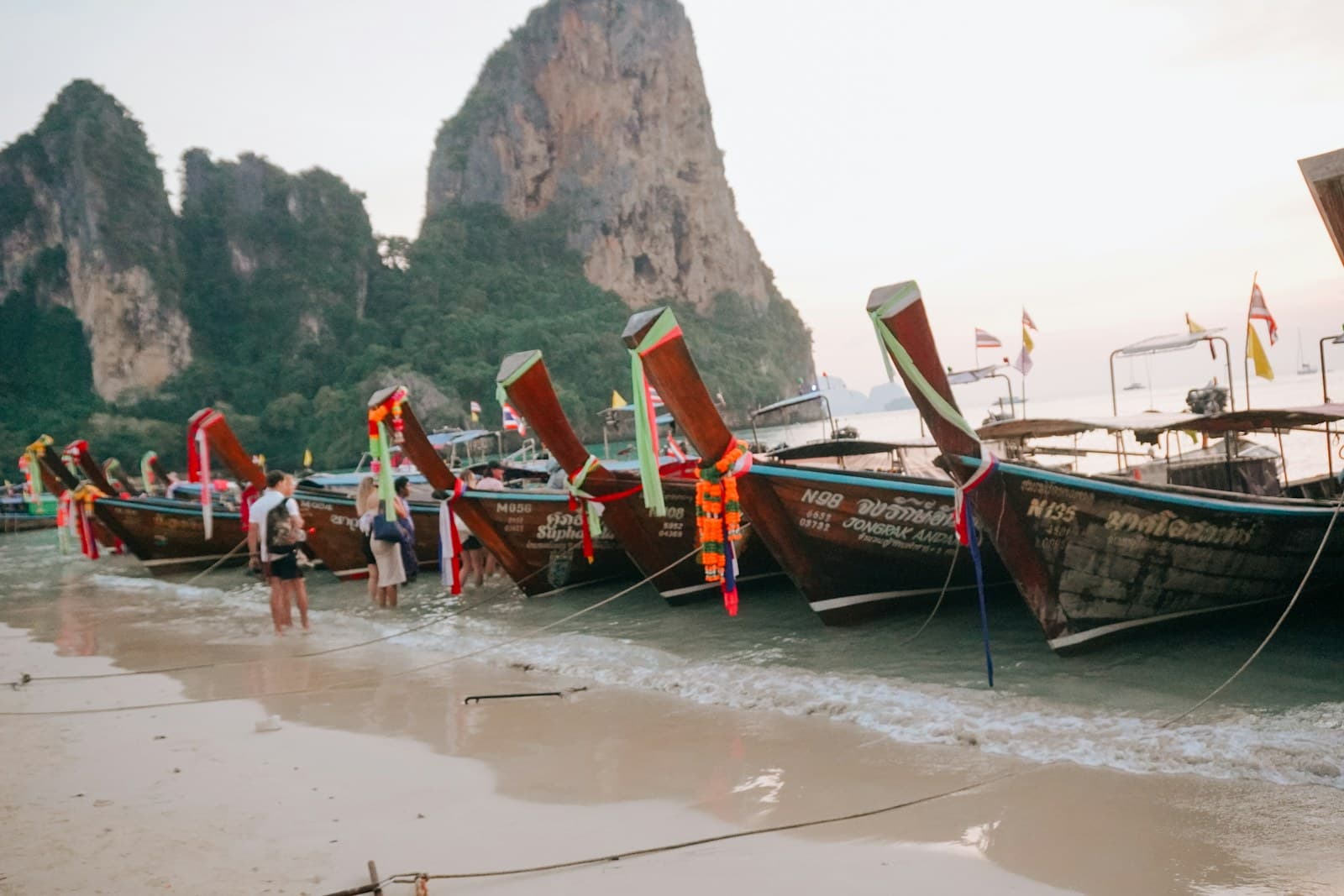
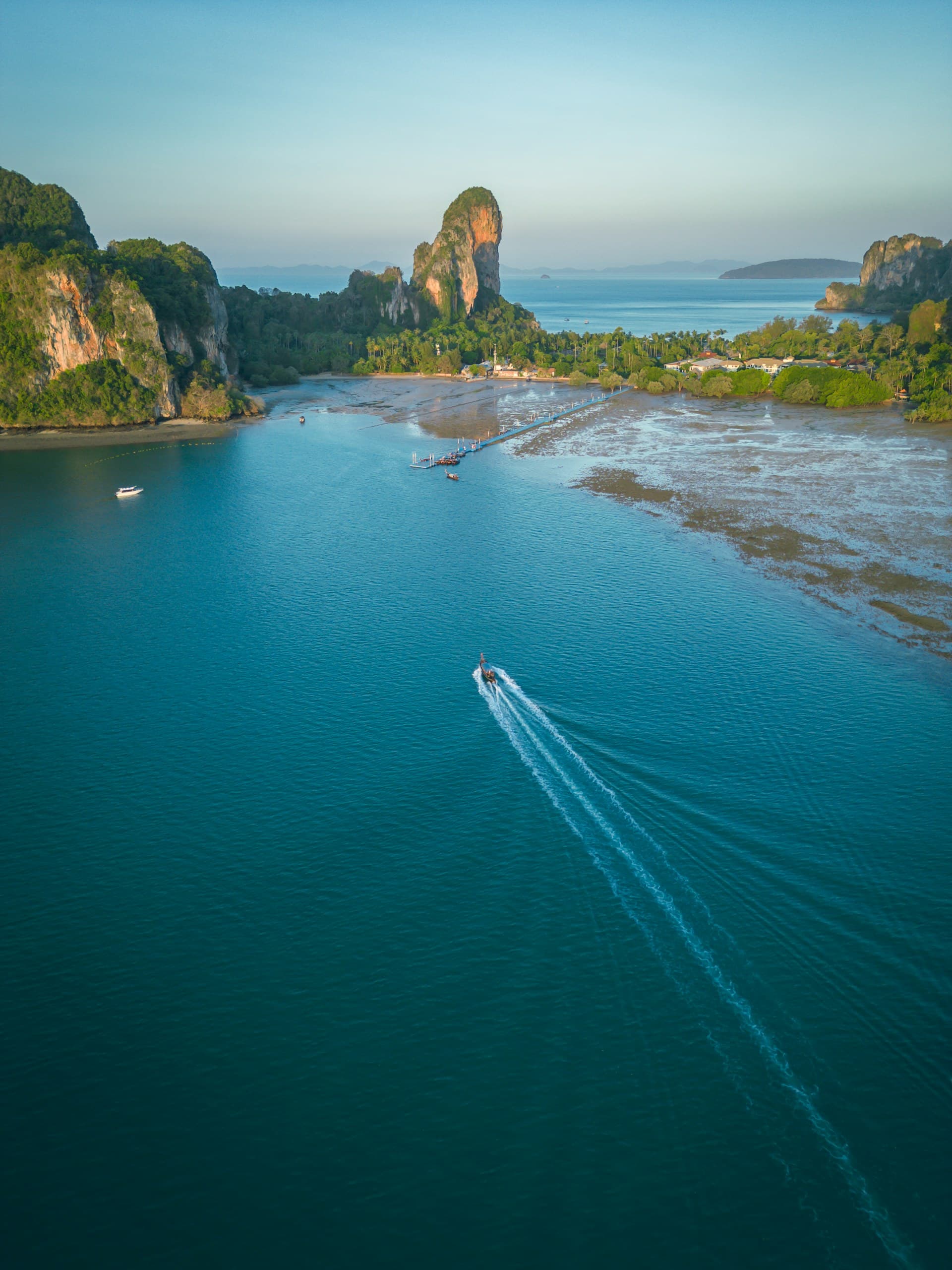
Thai longtail boats on turquoise water at Railay beach, Krabi

Thailand is the cheapest country on earth where everything still works. Trains run (mostly on time), food is genuinely great at any price point, the south has some of Asia's best beaches, the north has temples and jungle. Most travelers come for two weeks; a lot extend to three.

Two-trip framework. First trip: Bangkok (3 days) + Chiang Mai (3–4 days) + a south island block (4–7 days). Second trip: go deeper north (Pai, Mae Hong Son, Chiang Rai) or east into Isaan, the rural northeast almost no tourist sees. Skip the Phuket-Patong tourist strip; go Krabi or Ko Lanta instead — same coast, half the cost, twice the soul.

Two things to know. The cool-dry season is November–February — perfect everywhere, but book accommodation 2–4 months ahead. The Andaman coast (Phuket, Krabi, Phi Phi) has its monsoon May–October; the Gulf coast (Samui, Phangan, Tao) has its monsoon October–December. You can swap coasts mid-trip to chase dry weather.

Quick facts

CapitalBangkok
LanguageThai
CurrencyTHB ฿
TimezoneICT (UTC+7)
PlugType A / B / C · 220V
DrivingLeft
Visa

60-day visa exemption since July 2024 for EU, UK, US, Canada, Australia passports. Extendable +30 days at any immigration office.

When to go

Three windows to know: best, shoulder, and the one to avoid.

Best window

November – February

The cool-dry season. 25–30°C in the south, cool nights up north (10°C in Chiang Rai mountains). Perfect everywhere — and the entire planet knows it. Book 2–4 months ahead, especially Krabi, Phi Phi, Pai.

Shoulder

March · October

March is hot (35–38°C) but dry and quieter. October is the end of the Andaman monsoon — rain ebbing, prices still low, fewer travelers. Both work if you're willing to time it.

Avoid

April · Mid-May – September

April is 40°C+ and includes Songkran (April 13–15), the country-wide water-fight new year — fun if you plan around it, brutal if you don't. May–September is monsoon on the Andaman side, with the Phi Phi/Krabi islands often inaccessible. The Gulf islands (Samui side) are fine through August.

Must-see places

Spots that justify the trip on their own. Tap to open in Maps.

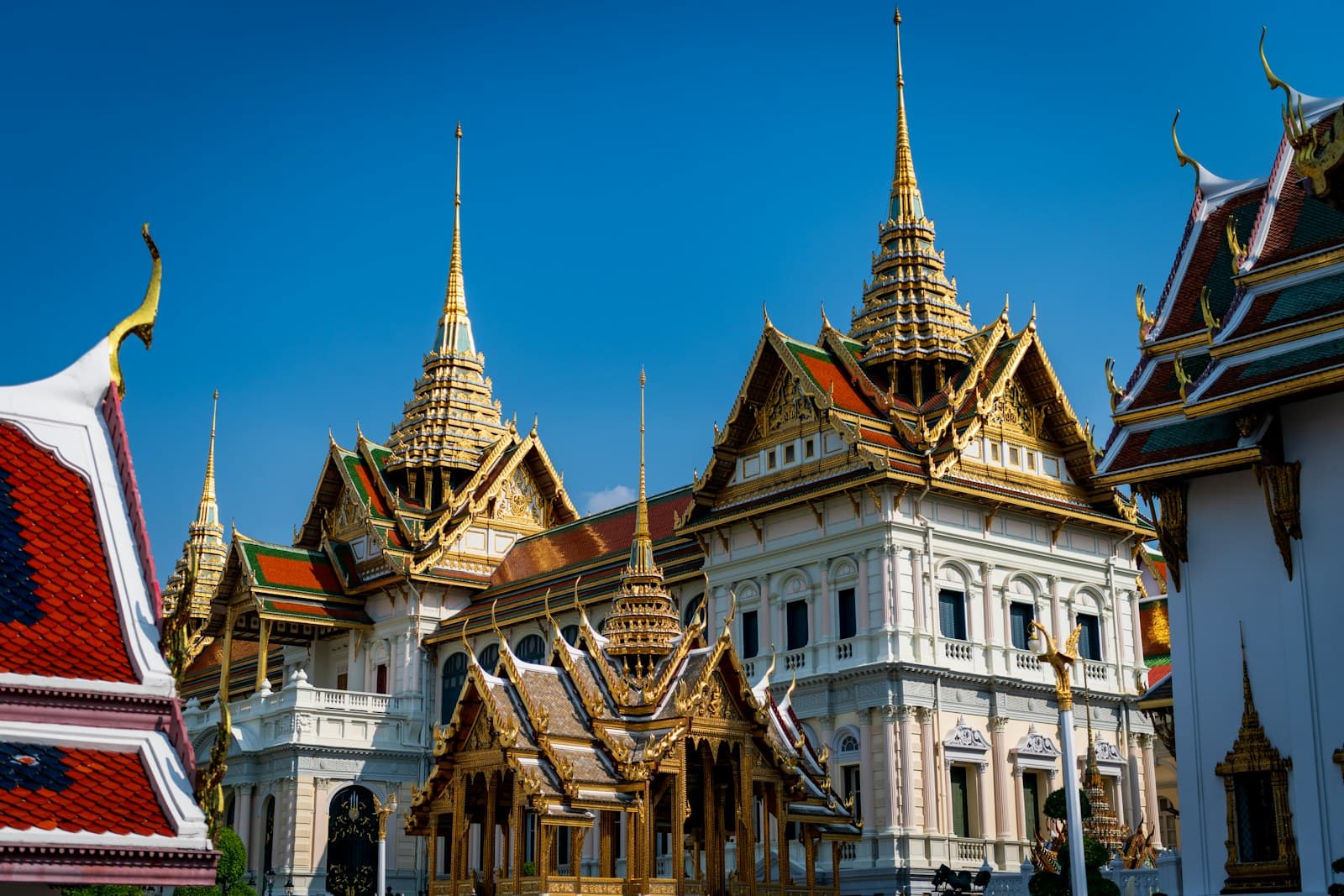
Golden spires of Bangkok's Grand Palace and Wat Phra Kaew
Bangkok, Central

Grand Palace & Wat Phra Kaew

The royal complex with the Emerald Buddha. Arrive at 8am opening to beat the heat and the tour groups. Strict dress code — shoulders and knees covered, no leggings, no ripped jeans. They rent sarongs at the entrance if you're underdressed.

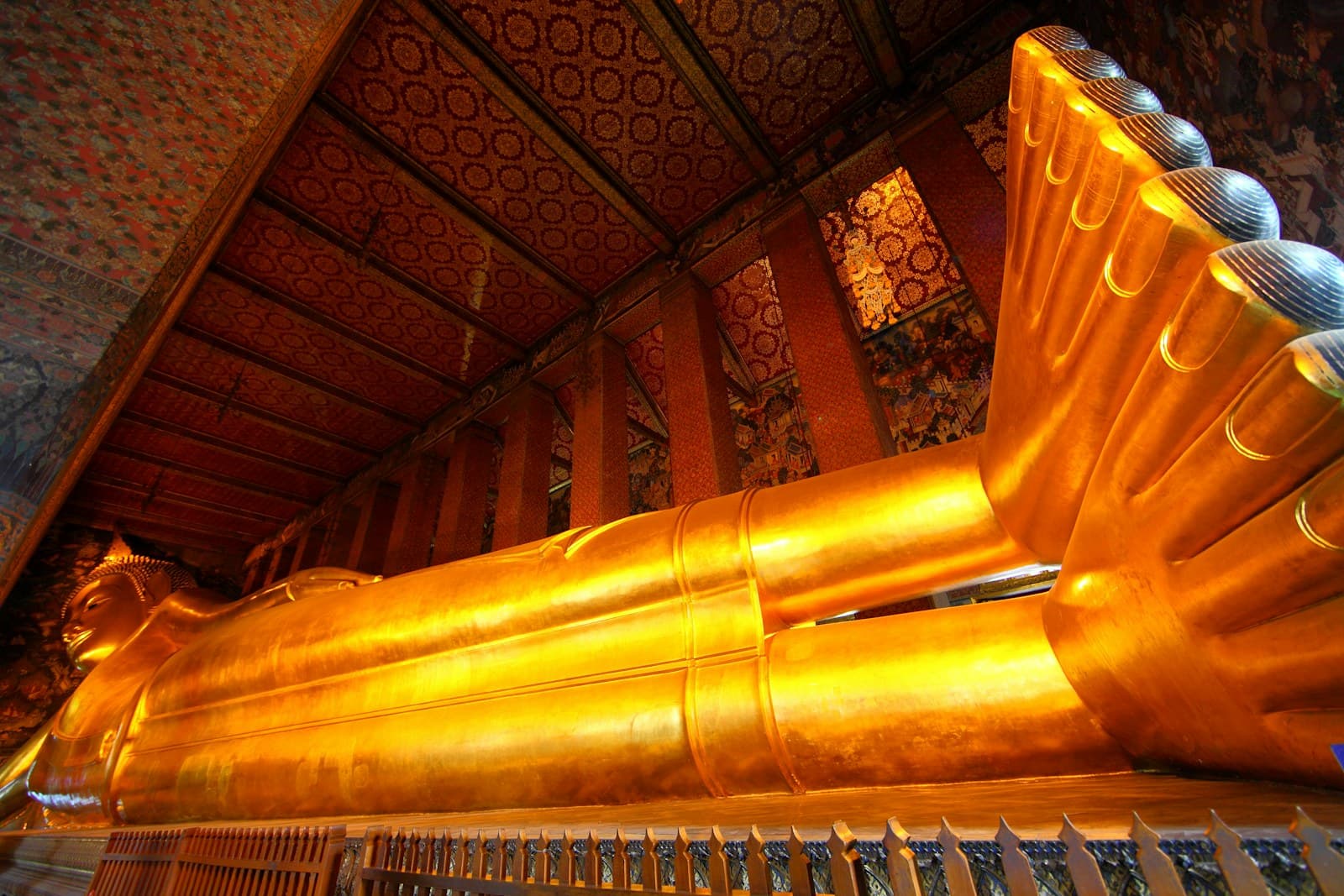
The 46-metre golden reclining Buddha statue at Wat Pho
Bangkok, Central

Wat Pho & the Reclining Buddha

A 46-metre gold-leaf Buddha lying on his side, with mother-of-pearl-inlaid feet. Also the birthplace of traditional Thai massage — the on-site training centre offers 60-minute sessions for around 600 baht. Combine with the Grand Palace next door.

Wat Arun temple's central prang against the Chao Phraya river at sunset
Bangkok, Central

Wat Arun

The Temple of Dawn, named ironically — it's the best sunset spot in Bangkok. Climb the central prang's steep steps, then watch the spires turn pink across the Chao Phraya from a riverside bar in Thonburi.

Buddha statue inside a Chiang Mai temple
Chiang Mai, North

Chiang Mai Old City

A square moat enclosing 30+ temples — Wat Phra Singh, Wat Chedi Luang, Wat Phan Tao. Sunday Walking Street (Ratchadamnoen Road, 4pm–10pm) is the best street market in Thailand. Stay inside the moat for the cleanest, walkable base.

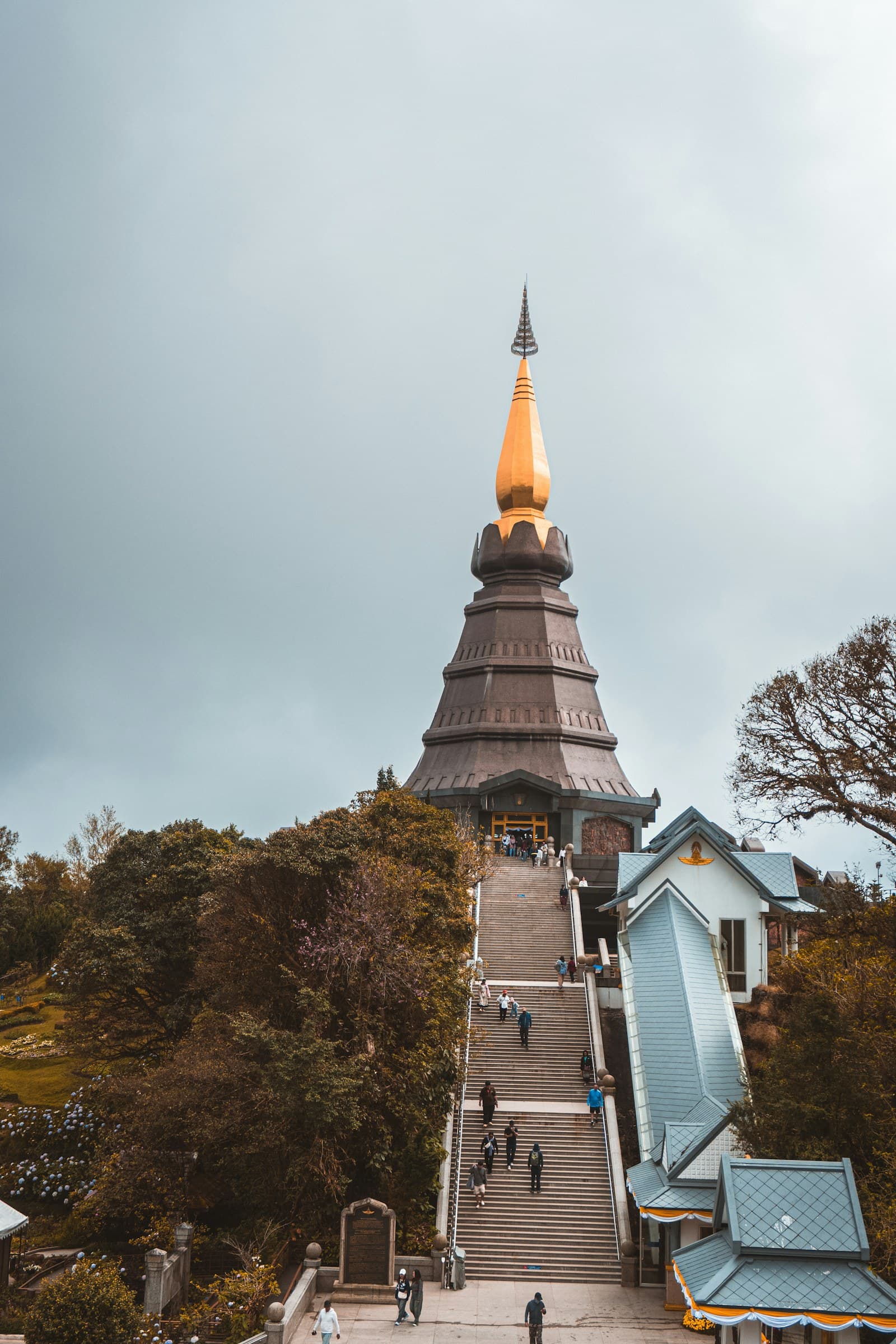
Golden chedi of Doi Suthep temple on a forested mountain
Chiang Mai, North

Doi Suthep

A hilltop temple 15km from Chiang Mai, reached by a 309-step naga staircase or a tram. Best at sunset for the panorama over the city. Rent a scooter or grab a red songthaew for around 100 baht round-trip.

Ancient stupas of Ayutthaya historical park at golden hour
Central Thailand

Ayutthaya Historical Park

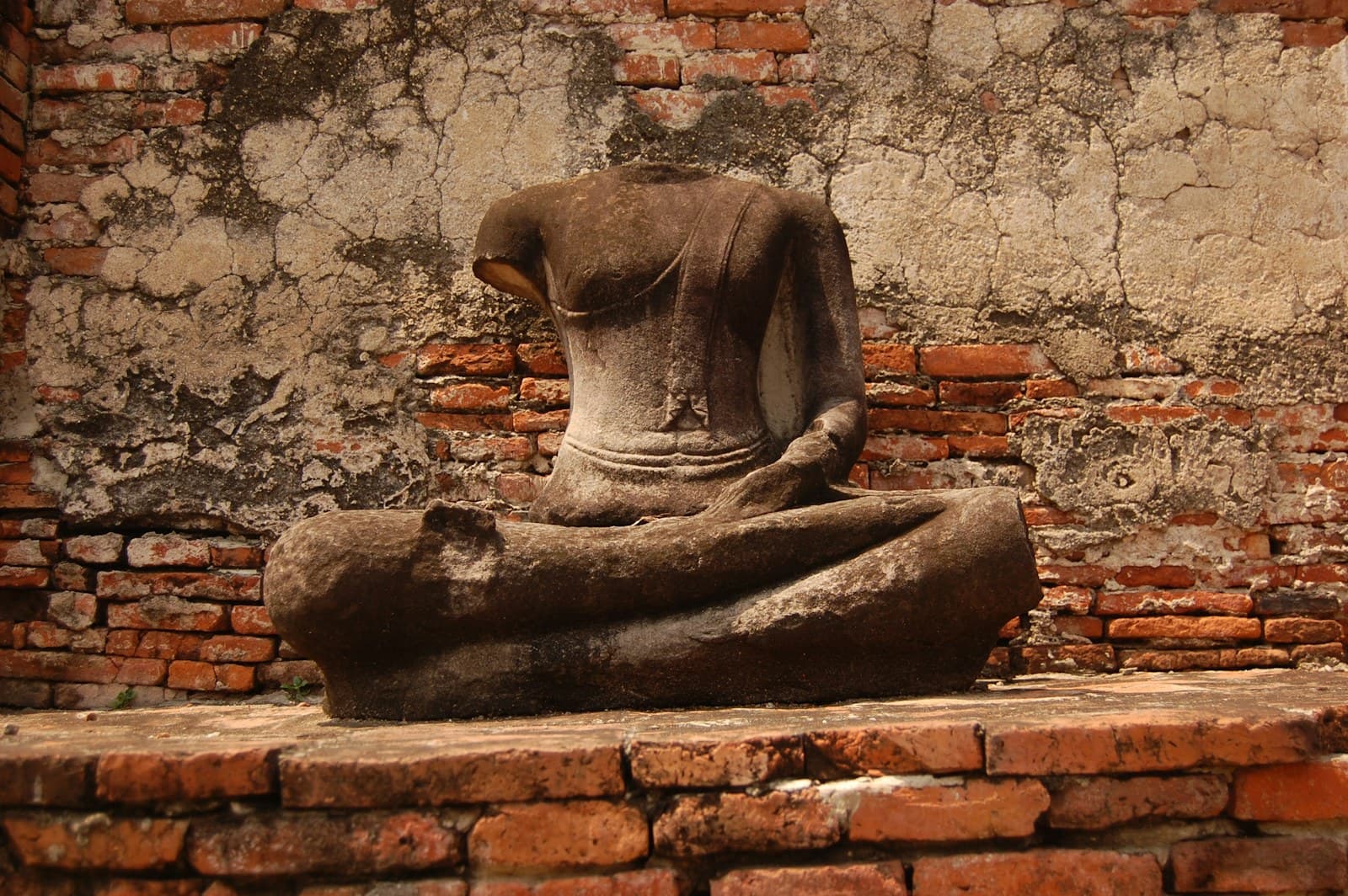
The 14th-century capital sacked by the Burmese in 1767 — UNESCO ruins of stupas and headless Buddhas, plus a famous Buddha head wrapped in tree roots at Wat Mahathat. 90 minutes from Bangkok by train. Rent a bike, ride between sites.

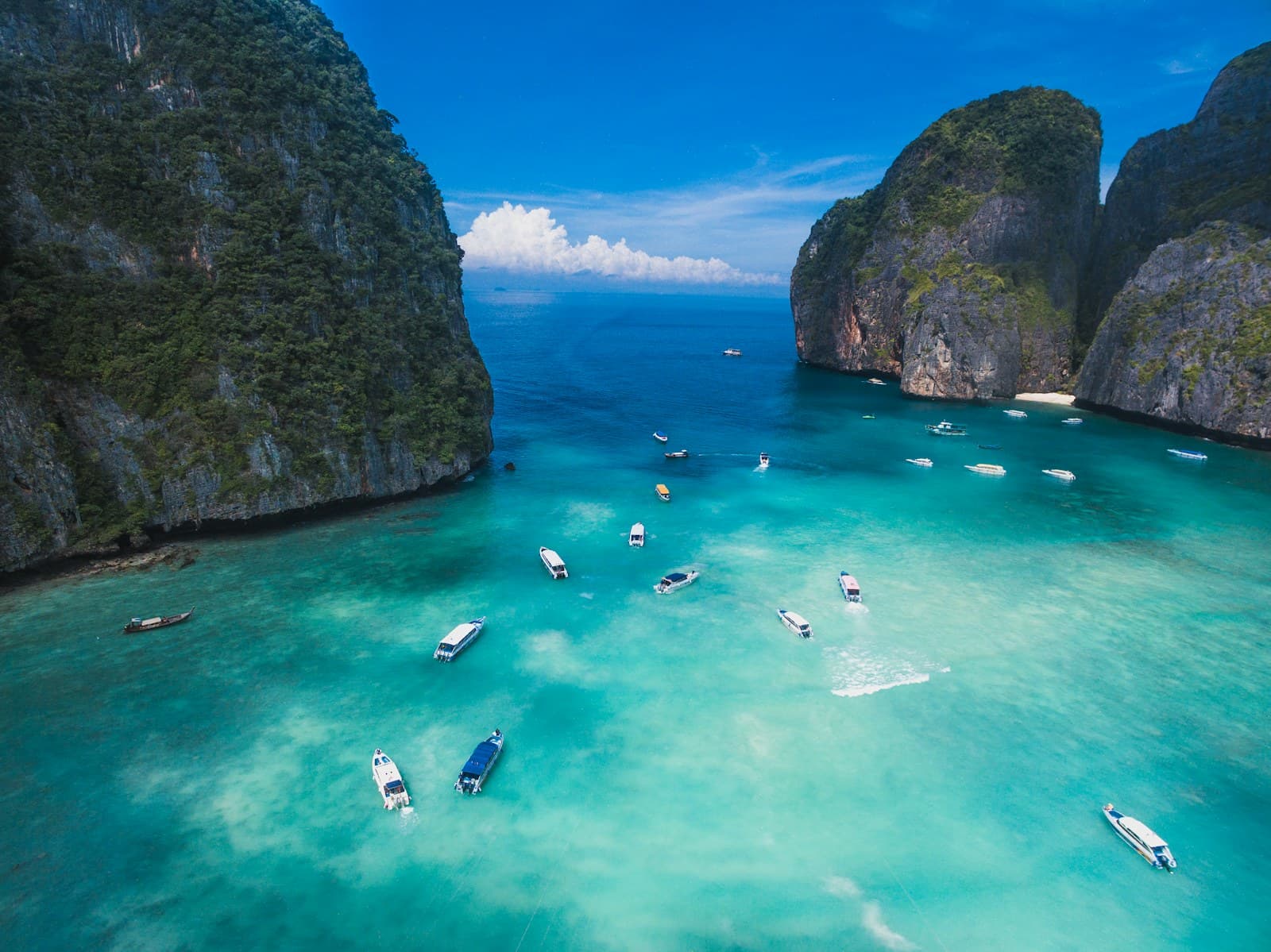
Maya Bay with limestone cliffs and turquoise water
Krabi, Andaman

Phi Phi Islands & Maya Bay

Limestone karsts in turquoise sea. Maya Bay reopened in 2022 with strict daily limits and no overnight stays — book the morning slot. Sleep on Phi Phi Don for the nightlife or day-trip from Krabi/Phuket for the day version.

Longtail boat on turquoise water below limestone cliffs at Railay
Krabi, Andaman

Railay & Krabi

A peninsula on the Krabi mainland accessible only by longtail boat — no roads in. Phra Nang Cave Beach is the iconic shot. Climbers come for some of Asia's best limestone routes; non-climbers come for the beaches.

Tropical beach with palm trees and turquoise sea on Ko Samui
Gulf Islands

Ko Samui, Phangan, Tao

The three Gulf islands. Ko Tao for diving (cheapest open-water certification in the world, around 10,000 baht). Ko Phangan for the monthly Full Moon Party at Haad Rin. Ko Samui for the comfort tier — direct flights, real resorts.

Large seated Buddha at Sukhothai historical park
North-Central Thailand

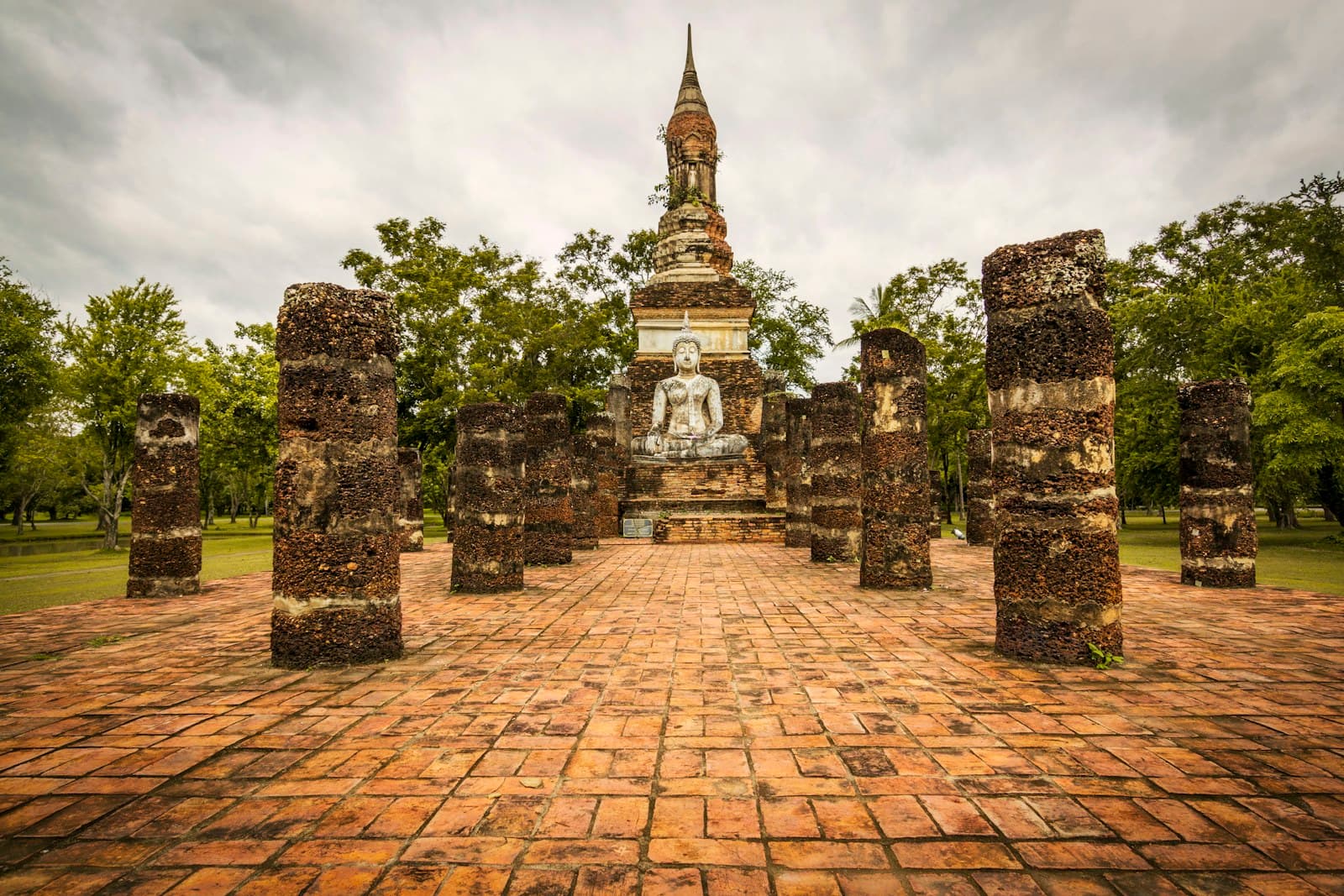
Sukhothai Historical Park

Older than Ayutthaya (13th–14th century) and even more atmospheric — fewer tourists, biking trails through ruins, big seated Buddhas in lotus position. 7 hours by overnight bus from Bangkok or short flight to Sukhothai airport.

White Temple Wat Rong Khun with mirror-tile decorations
Chiang Rai, North

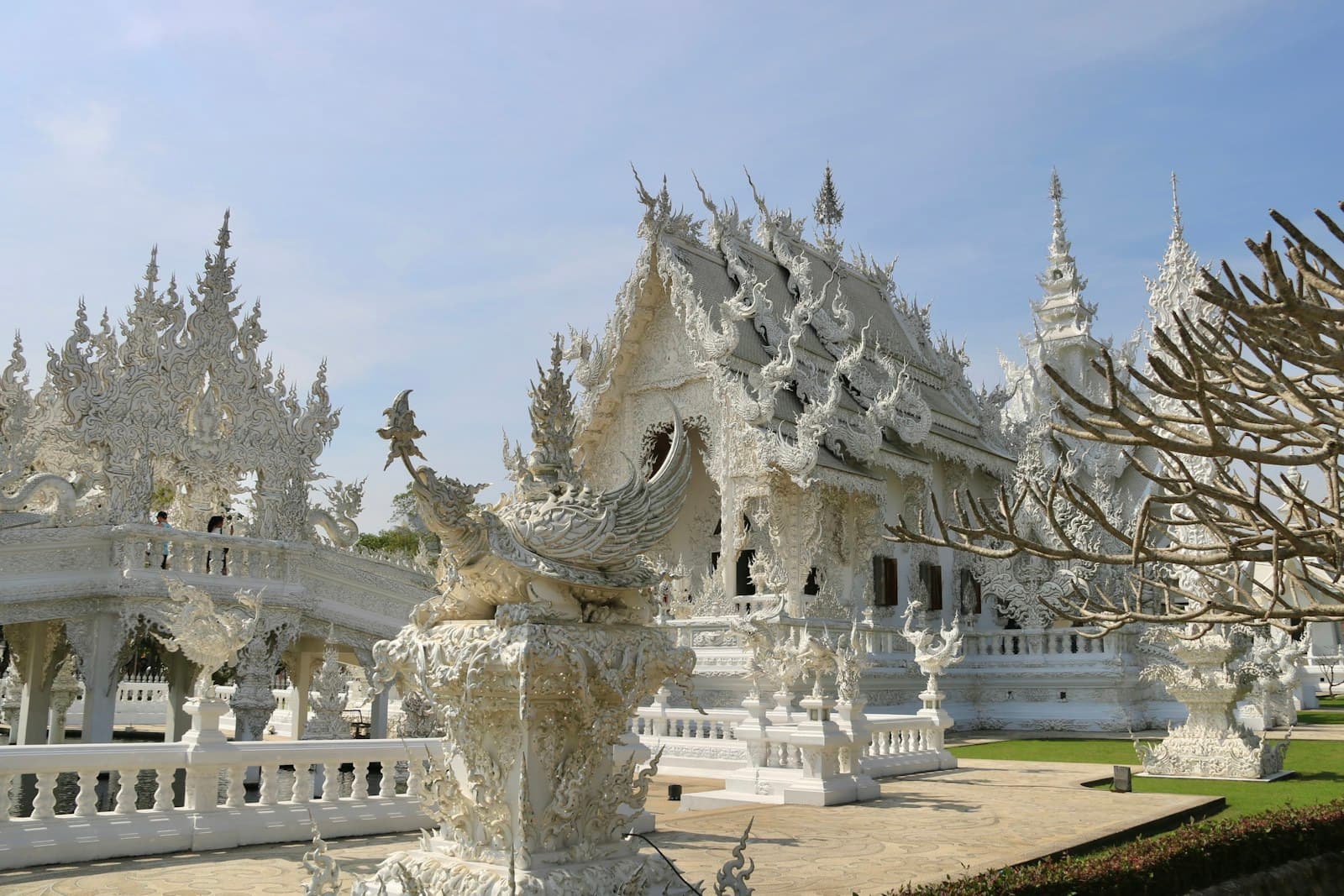
Wat Rong Khun (White Temple)

A modernist Buddhist temple built since 1997 by artist Chalermchai Kositpipat — all-white plaster, mirror-tile facets, hands reaching up out of the ground. Includes a Predator and a Hello Kitty mural inside. 3 hours by bus from Chiang Mai.

Limestone karsts rising from Cheow Lan Lake in Khao Sok National Park
Surat Thani, South

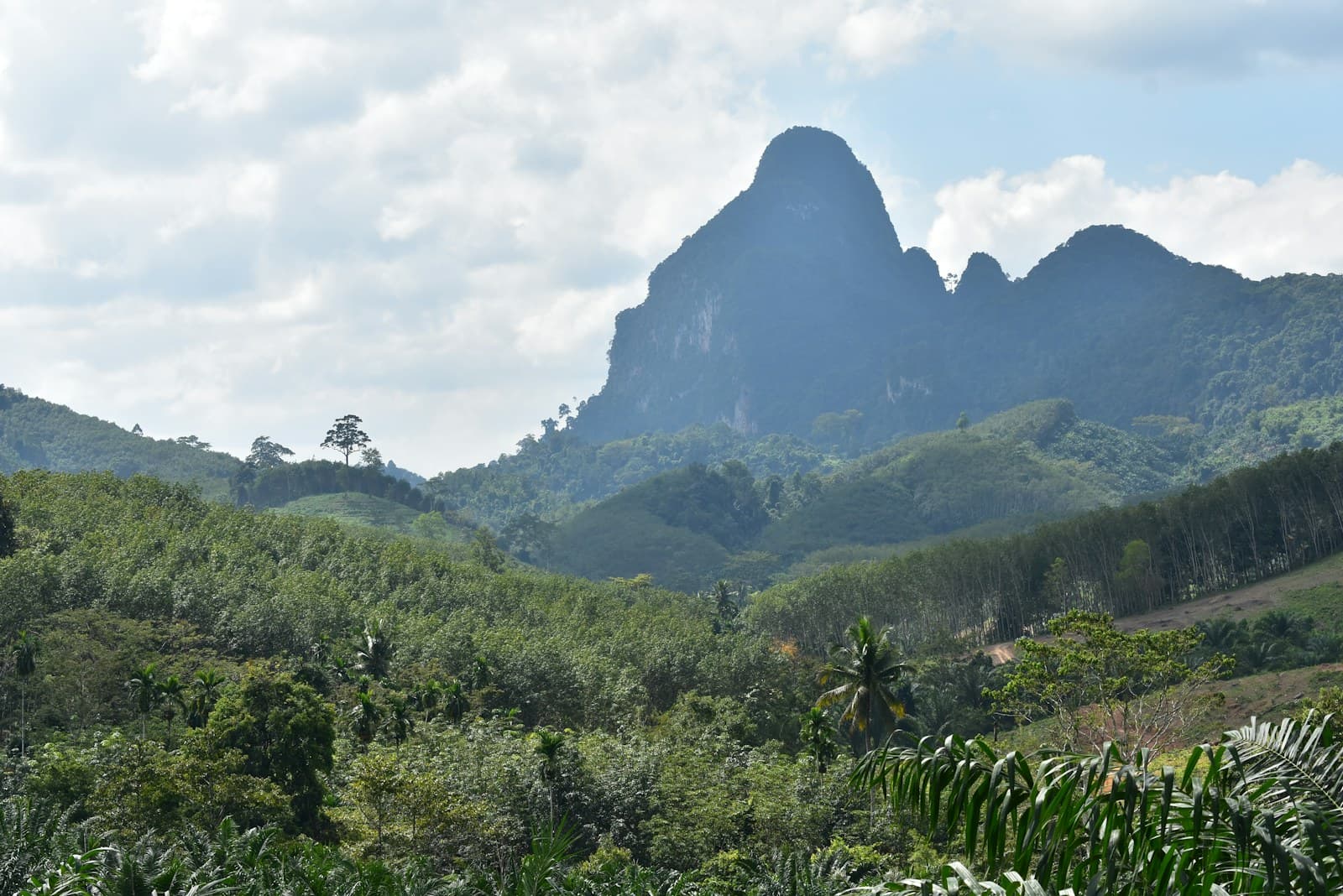
Khao Sok National Park

180-million-year-old rainforest with limestone karsts rising out of Cheow Lan Lake. Sleep in floating raft bungalows, hear gibbons at dawn, kayak between cliffs. The wildest accessible jungle in Thailand. 2–3 days minimum.

Specialties worth trying

Food, drinks, and experiences this country does better than anywhere else.

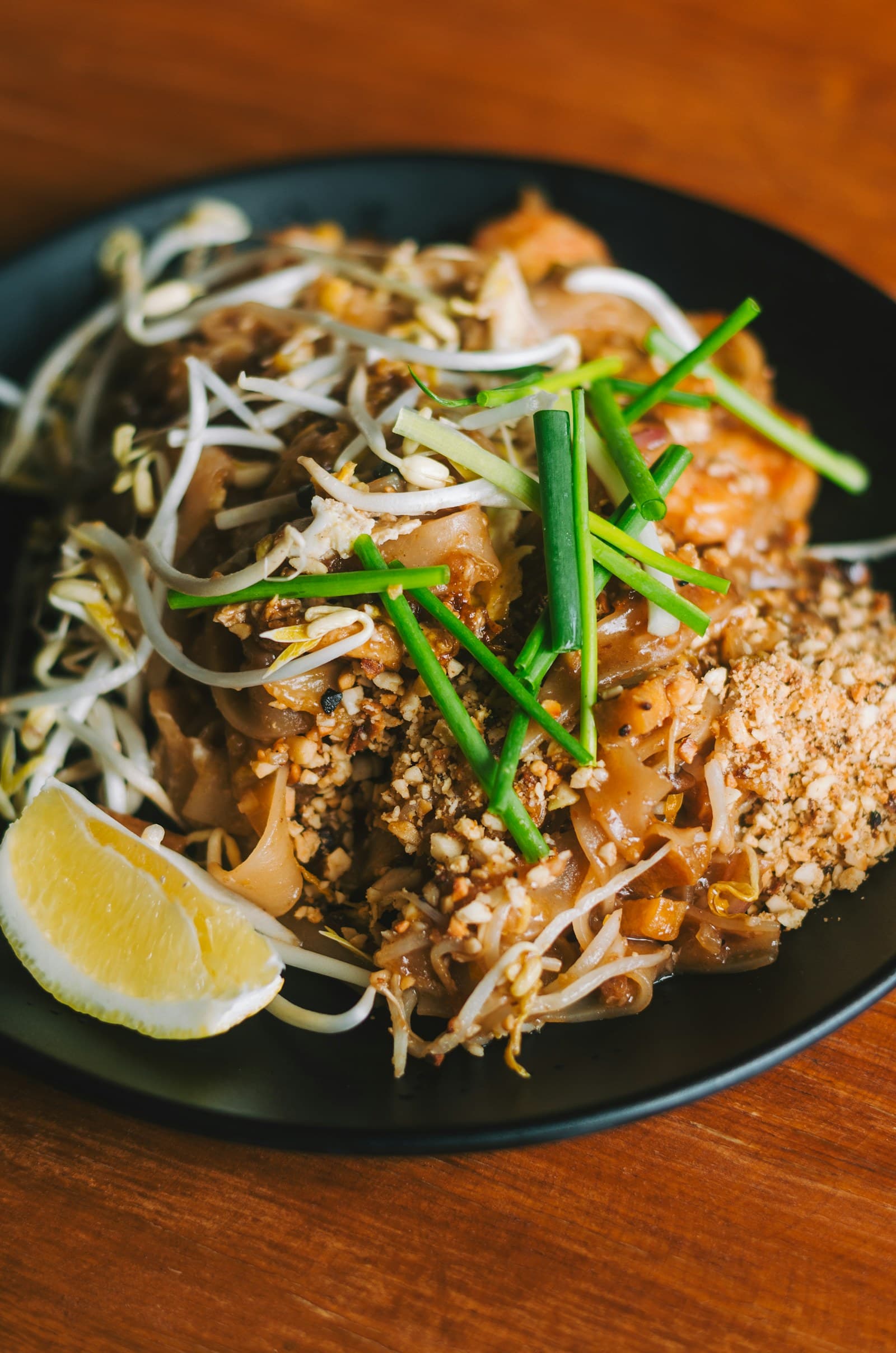
Plate of pad thai noodles with shrimp and limeFood

Pad Thai & noodle dishes

Pad Thai is the gateway, not the destination. The real range: khao soi (northern curry noodle soup, Chiang Mai), boat noodles (small bowls, intense broth, Bangkok), pad see ew, kway teow, drunken noodles. Order whatever the locals are eating at the cart with the longest queue.

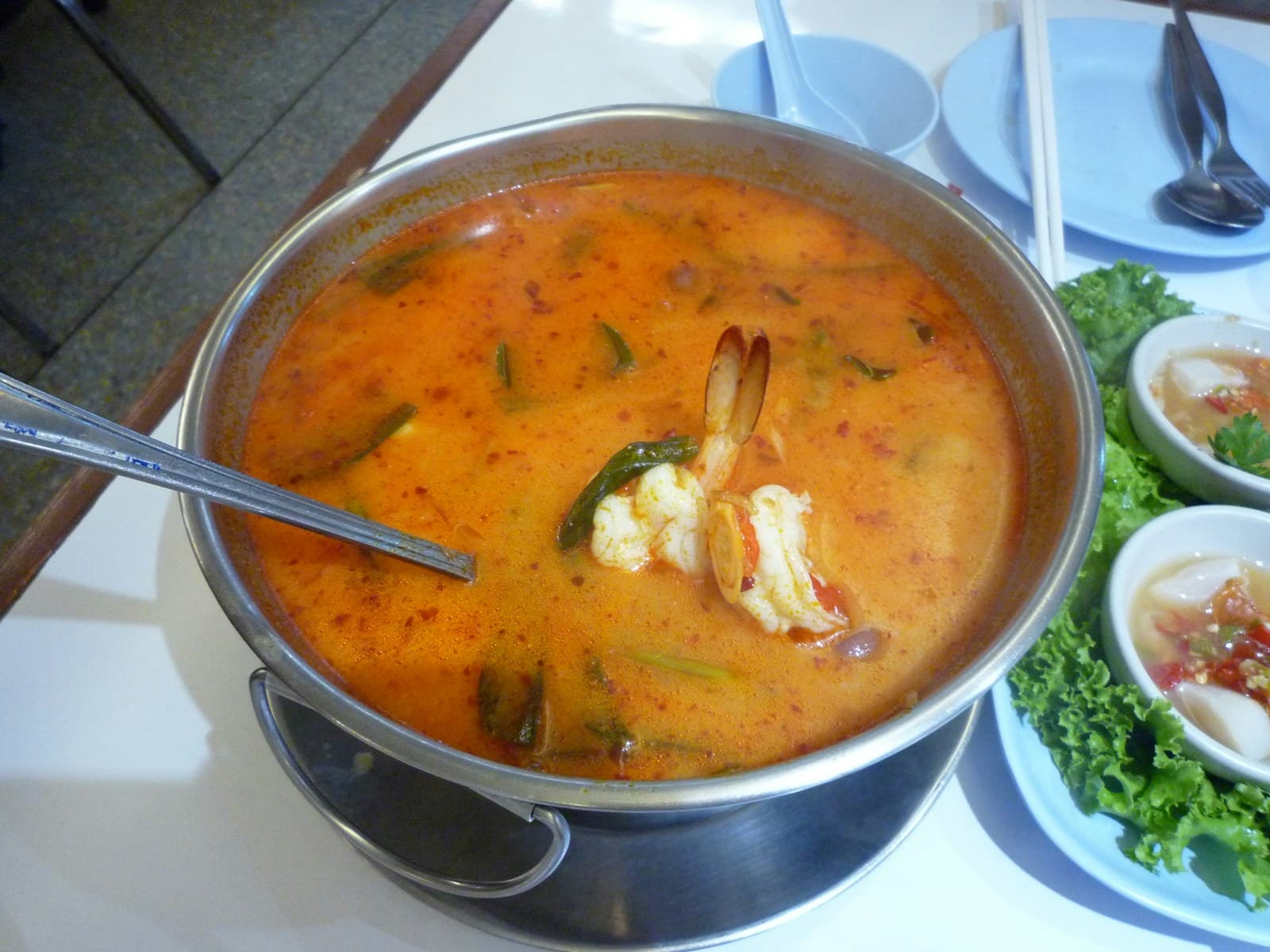
Bowl of tom yum goong soup with shrimp and herbsFood

Tom Yum & curries

Tom yum goong (hot-sour shrimp soup with lemongrass + galangal + lime) is the iconic Thai soup. Tom kha is the milder coconut version. Gaeng dang (red curry), gaeng khiao wan (green curry), massaman (Indian-influenced) round out the canon. Order 'mai phet' (not spicy) if you're new — they'll still make it spicy.

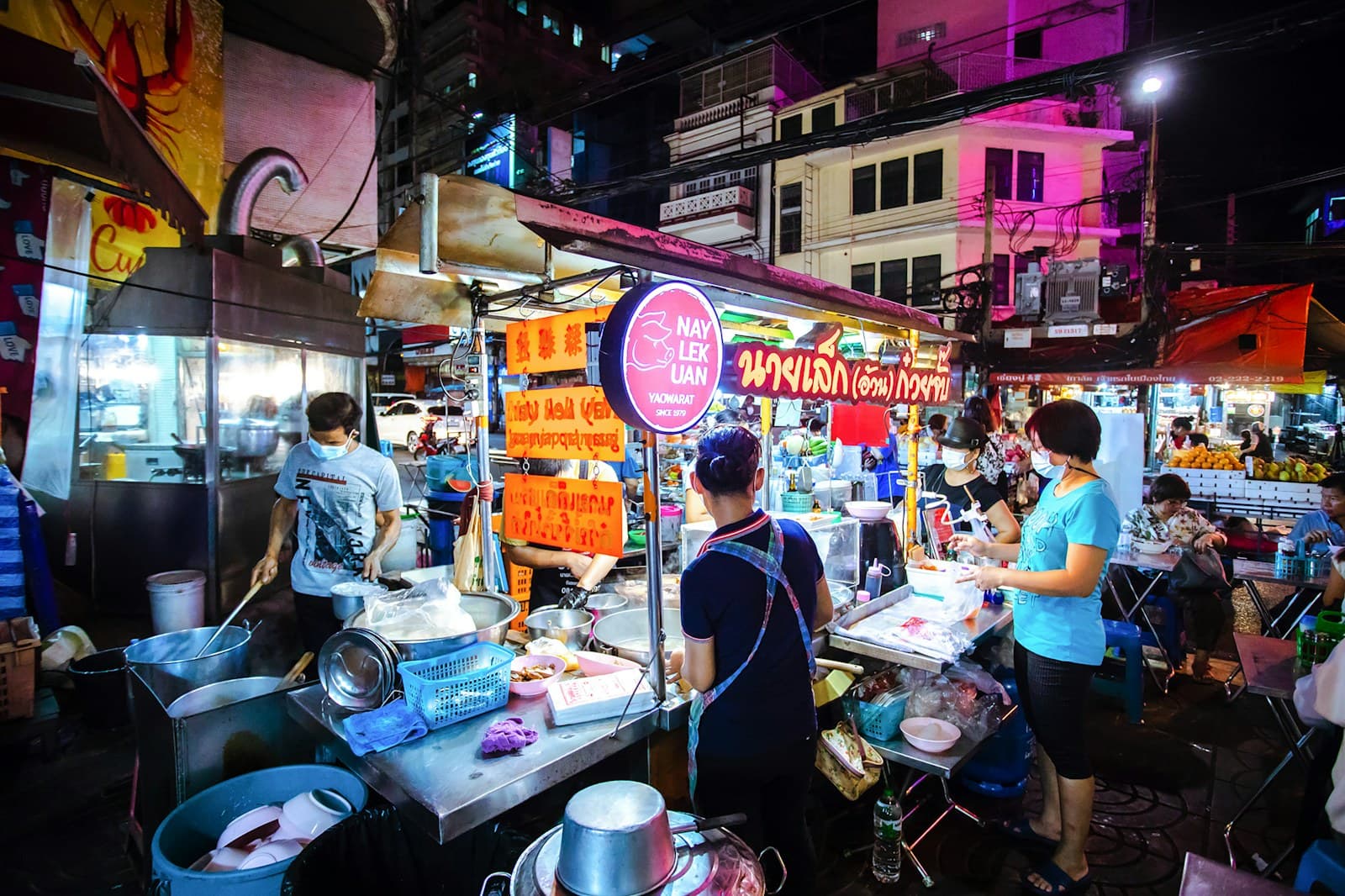
Bangkok street food stall at night with neon lightsFood

Street food

Thailand's street food is one of the world's great cuisines. Bangkok's Yaowarat (Chinatown) at night, Or Tor Kor market for produce + cooked stalls, Chiang Mai's Sunday Walking Street. Look for stalls with locals eating — empty stalls are empty for a reason.

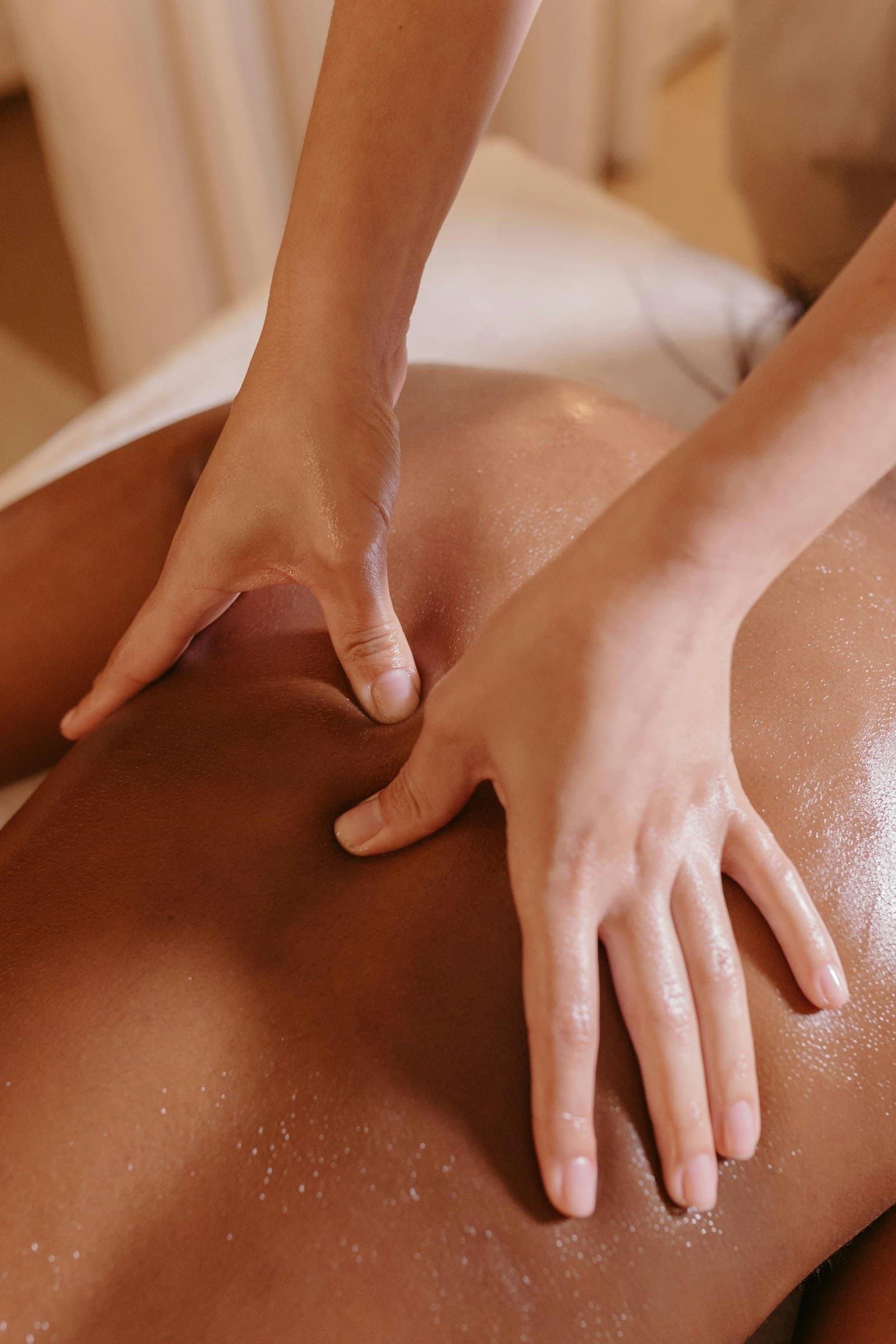
Traditional Thai massage with herbal compressesExperience

Thai massage

A two-person yoga — practitioner pushes, pulls, and stretches you. 250–400 baht for 60 minutes at a real shop. Wat Pho's school is the temple of the discipline. Pad Thai Sai-aroon-style 'oil massage' is the gentler tourist version. Both worth it.

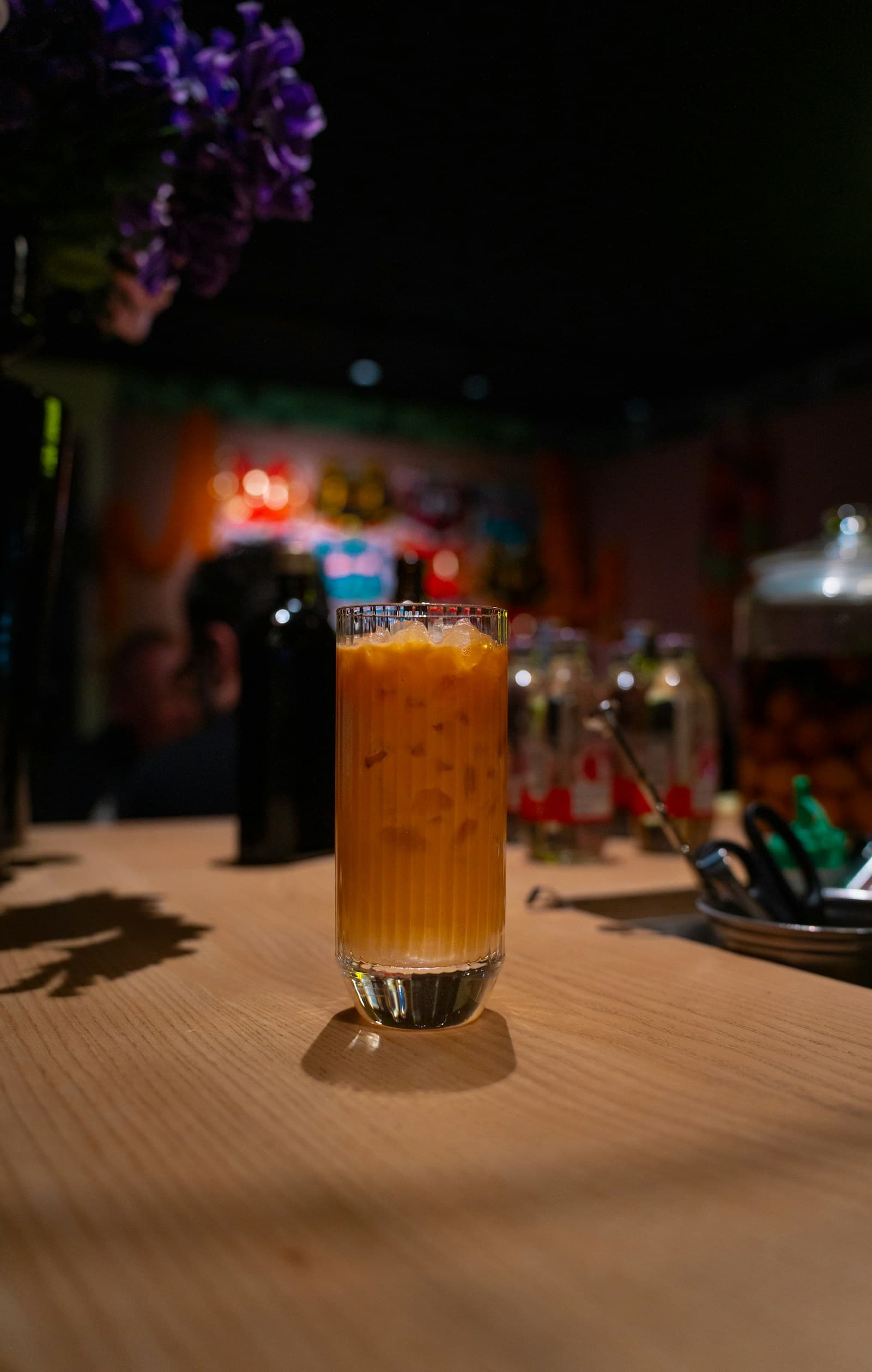
Glass of bright-orange Thai iced tea with milkDrink

Thai tea & local drinks

Cha yen — bright-orange iced tea with sweetened condensed milk — is the Thailand drink. Singha and Chang are the dominant beers; Leo if you want cheap. Coconut water from a fresh young coconut at any roadside stall, 30–50 baht. Fruit-shake culture is everywhere.

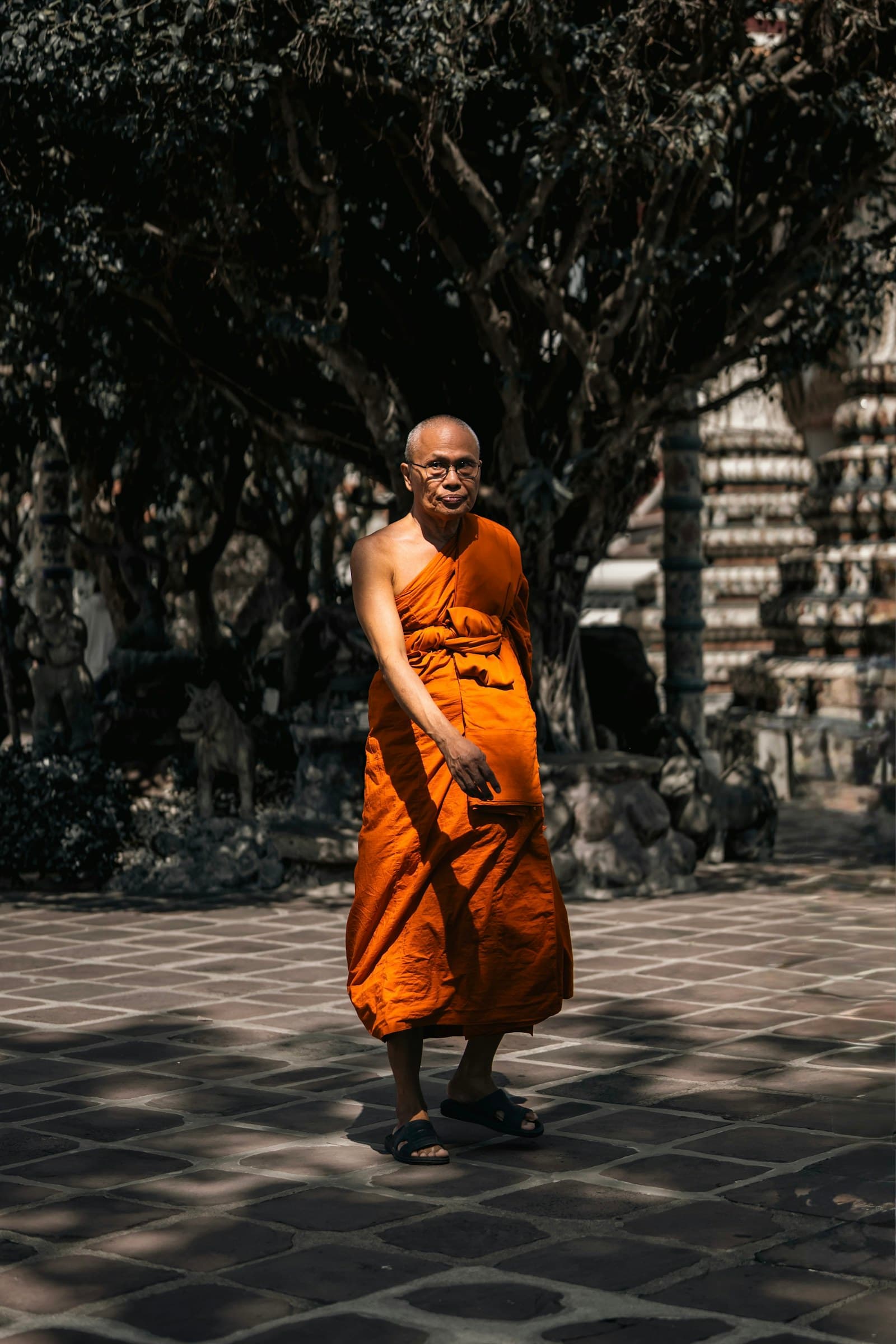
Buddhist monks in orange robes at a Thai templeExperience

Buddhism & temple culture

95% Theravada Buddhist. Morning alms procession (saffron-robed monks accepting food from kneeling locals) starts around 6am — Chiang Mai's old city is the easy spot to witness it. Most boys ordain as monks for at least a few weeks of their life.

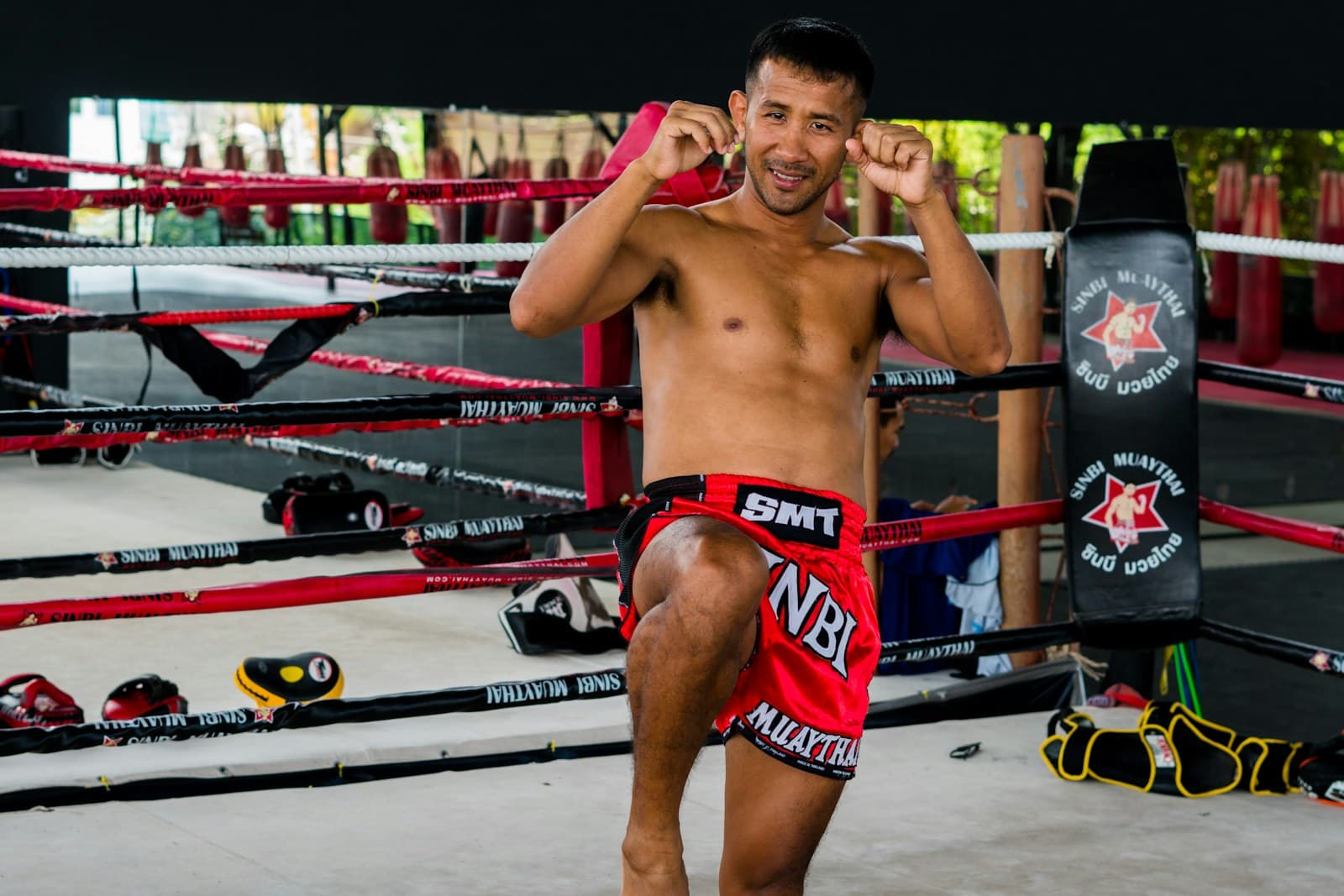
Muay Thai fighter mid-kick in a boxing ringExperience

Muay Thai

The national sport — knees, elbows, shins, fists. Bangkok's Rajadamnoen and Lumpinee stadiums are the major-league venues, 1,500–2,000 baht for tourist seats. Smaller fights happen everywhere; tourist gyms in Chiang Mai and Phuket offer week-long training camps.

Regions to know

To frame your trip by what you have time for and what you're after.

Bangkok & Central

Bangkok, Ayutthaya, Kanchanaburi, Khao Yai

Bangkok as gateway — most flights land at Suvarnabhumi (BKK). Day trips: Ayutthaya (UNESCO ruins), Kanchanaburi (Bridge over the River Kwai + Erawan Falls), Khao Yai national park (oldest in Thailand, monkeys + waterfalls).

The North

Chiang Mai, Chiang Rai, Pai, Mae Hong Son

Cooler, mountainous, temple-dense. Chiang Mai as base, then Chiang Rai (White Temple, Blue Temple), Pai (hippie town in a valley), Mae Hong Son (remote loop with elephant sanctuaries — go to ethical ones only). Best November–February.

South Andaman

Phuket, Krabi, Phi Phi, Ko Lanta, Khao Lak

The famous coast — limestone karsts, turquoise water, the postcard Thailand. Best November–April; rough seas and closed boats May–October. Skip Patong (Phuket's tourist strip) for Krabi or Ko Lanta unless you want the party.

South Gulf

Ko Samui, Ko Phangan, Ko Tao

Opposite monsoon timing to the Andaman — best January–August. Ko Tao for cheap diving, Ko Phangan for the Full Moon Party (and a quieter west coast), Ko Samui for the comfort tier with direct international flights.

Isaan (Northeast)

Khon Kaen, Ubon Ratchathani, Khmer ruins, rural Thailand

The Thailand no one visits. Khmer ruins (Phimai, Phanom Rung — Angkor's cousins), spicy Isaan food (som tam, larb, sticky rice), almost no tourists. Add 3–5 days to a longer trip; not a fit for the first visit.

Western & Khao Sok

Khao Sok, Cheow Lan Lake, Erawan Falls

The wildest jungle south of Bangkok. Khao Sok's floating raft bungalows on Cheow Lan Lake are a bucket-list overnight. Erawan Falls (7-tier turquoise pools) is in Kanchanaburi province — easy day or overnight from Bangkok.

Suggested itineraries

Three lengths, depending on time. Fork any of them into WePlanify.

7d

Bangkok + Chiang Mai — 7 days

The temples + culture short trip. Skip the beaches; cover Bangkok and the north in a week. Internal flights are 800–1,500 baht.

  • Day 1–3: Bangkok (Grand Palace, Wat Pho, Wat Arun, Chinatown street food)
  • Day 4: Ayutthaya day trip by train
  • Day 5–7: Chiang Mai (Old City temples, Doi Suthep, Sunday Walking Street) → fly home from CNX
10d

Bangkok + North + Islands — 10 days

Add a south island block. The most common first-trip itinerary. Two domestic flights; book the Bangkok-Krabi leg in advance.

  • Day 1–3: Bangkok
  • Day 4–6: Chiang Mai
  • Day 7–10: Krabi + Railay + Phi Phi day trip (fly home from KBV or back via BKK)
14d

Full Thailand — 14 days

Add Pai for the north loop and stretch the islands. Faster pace, but you get the three faces of Thailand: capital, mountains, sea.

  • Day 1–3: Bangkok + Ayutthaya day trip
  • Day 4–6: Chiang Mai
  • Day 7–8: Pai (scooter loop, hot springs)
  • Day 9–10: Chiang Rai (White Temple) → fly south
  • Day 11–14: Krabi + Phi Phi or Ko Samui block

Daily budget

Per person, excluding flights. Three comfort tiers.

Backpacker
40/day

Hostel dorm or fan bungalow (€10), street food + one cooked meal (€10), local buses, songthaew, walking (€5), one paid temple or activity (€15). Thailand on a backpacker budget is still one of the best value trips on earth.

Mid-range
100/day

Air-con 3-star hotel or pool guesthouse (€55), one sit-down dinner + casual meals (€25), domestic flight averaged (€10), entries + one activity (€10). The right tier — Thailand mid-range is what Europe budget would be.

Comfortable
240/day

Resort or beach villa (€150), one upscale dinner + great meals (€55), private transfers / business-class domestic (€20), guide / activity (€15). Honeymoon and resort-trip tier.

Per person, excluding international flights. Domestic flights AirAsia / Thai Lion Air run 800–2,500 baht (€20–65) if booked 1–2 months ahead. Cash is king outside cities — ATM withdrawal fees are 220 baht per transaction so take out big amounts at once.

Cultural do's & don'ts

Small moves that matter — and the ones that make everyone uncomfortable.

  • Dress for temples — shoulders and knees covered, both genders. No shorts, no leggings, no tank tops, no ripped jeans. Sarongs are often rented at major sites if you forget; carry a light scarf either way.

  • Don't touch a Thai person's head, don't point your feet at people or at Buddha statues, don't sit with feet pointing at a shrine. The head is sacred, the feet are profane — it's the single biggest non-verbal rule.

  • Use Bolt or Grab for taxis in Bangkok and Chiang Mai. Metered taxis often refuse short trips or quote inflated flat rates. Tuk-tuks are fun but always overpriced for tourists — agree the price before you sit down.

  • Bargain at markets, but politely. Start around 60% of the asking price and meet near 70–80%. Don't haggle over 20 baht (50 cents) — you're rich by local standards and that's the dignity line.

  • Don't criticize the royal family or display the king's image disrespectfully. Lèse-majesté laws carry up to 15 years per offence and are enforced — including against tourists. It's the one topic you don't joke about.

  • Carry small notes (20–100 baht). Street stalls, tuk-tuks, songthaews, and small shops often can't break a 1,000-baht note. ATMs dispense 1,000s — break them at 7-Eleven by buying water.

  • Don't drink tap water anywhere except in very high-end hotels. Bottled water is 7–15 baht everywhere, ice in restaurants is generally safe (made from purified water in commercial machines).

  • Say 'mai phet' (not spicy) if you're not Thai-spice trained. It will still be spicy by Western standards, but won't blow your sinuses. Order one truly spicy dish per meal as a calibration — Thai people are kind about it.

Plan your Thailand trip with your crew

Bring this guide into WePlanify, invite the group, and build the trip together. Shared map, polls, shared budget — all free.