WePlanify logo
Country guide · Africa

Morocco
travel guide

Real Morocco travel guide for 2026: best season, Marrakech to the Sahara, regional food, honest budgets, cultural do's and don'ts. First and repeat trips.

AfricaMAD35230 /day

Build your itinerary with your group — free, 30 seconds.

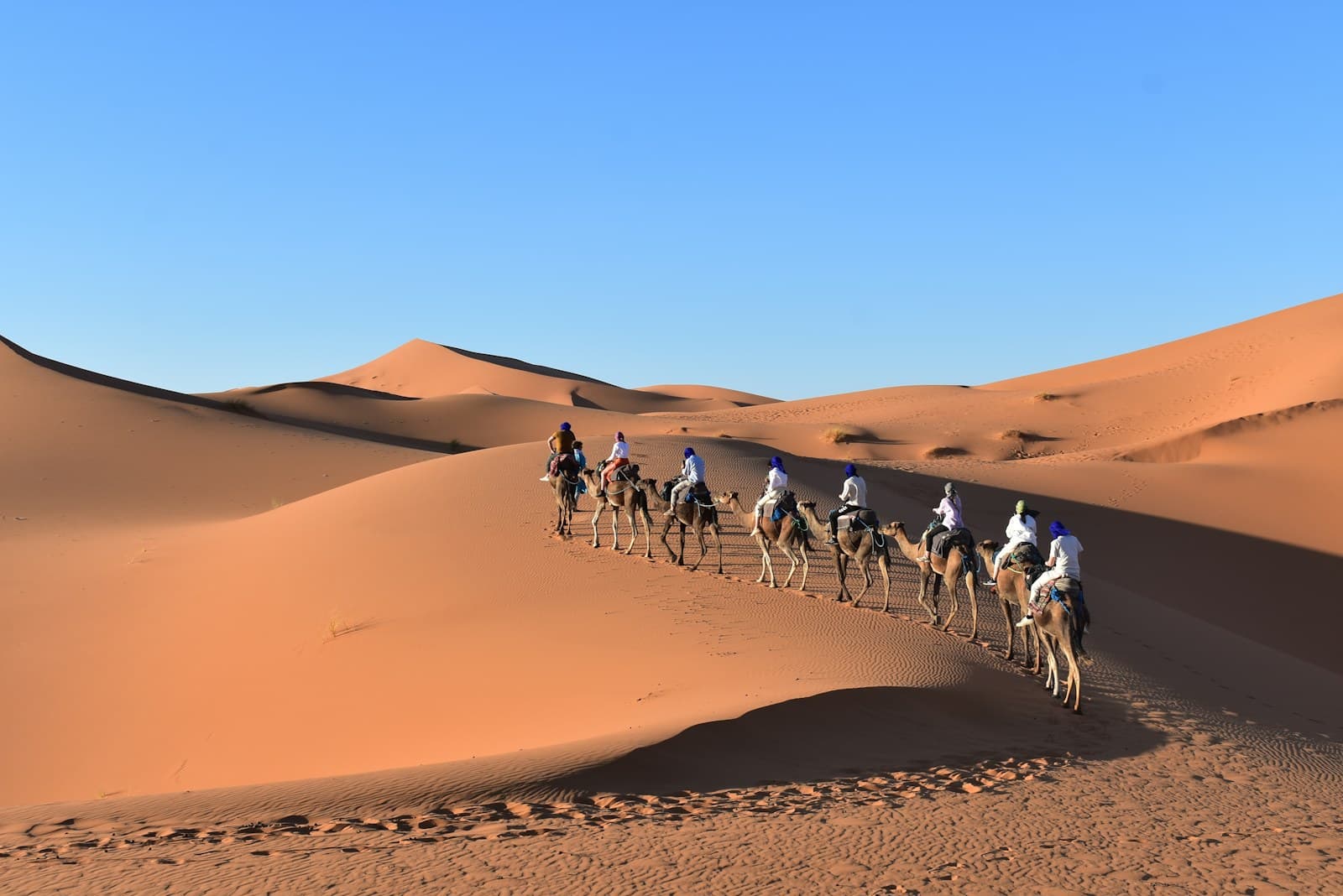
Camel caravan crossing Sahara dunes at golden hour

Morocco is the closest 'completely different world' from Europe — a 2.5-hour flight from Paris or Madrid, but a thousand years of history, a different alphabet, four languages (Arabic, Berber, French, Spanish), and a sensory overload that takes a day to recalibrate. The medinas are alive, the food is generous, the desert is real, and the kindness of strangers is constant — even through the hustle.

First trip: Marrakech (3 days) + a Sahara overnight + Fes (2 days) + Chefchaouen or Essaouira (2 days). Second trip: the Atlas mountains hiking, Atlantic coast surfing (Taghazout, Imsouane), the deep south (Tafraoute, Agadir). Skip Casablanca as a destination — it's where you land, not where you stay.

Two things to know. The medinas are designed to disorient — accept getting lost; that's the experience. Use Google Maps offline + your hotel's WhatsApp for when you really can't find the way back. And Ramadan (variable, March–April in 2026 / 2027) reshapes everything: most restaurants closed during the day, but the after-iftar evenings are magical if you respect the rhythm.

Quick facts

CapitalRabat
LanguageArabic · Berber · French widely spoken
CurrencyMAD د.م
TimezoneWEST (UTC+1) · same as Europe in winter, 1h behind in summer
PlugType C / E · 220V
DrivingRight
Visa

Visa-free up to 90 days for EU, UK, US, Canada, Australia passports.

When to go

Three windows to know: best, shoulder, and the one to avoid.

Best window

March – May · September – November

Warm days, cool evenings, the Sahara still doable (40°C+ in midsummer is brutal). Spring brings desert wildflowers; autumn the olive harvest. Avoid Ramadan if you want full restaurant access — check the dates each year (it shifts ~11 days earlier annually).

Shoulder

December – February

Mild in Marrakech (15–20°C day, 5°C night), cold in Fes and the mountains. Atlas peaks get snow. Sahara nights drop below freezing. Tourist density is lowest — and prices in riads are 30–40% off.

Avoid

June – August

Marrakech and Fes hit 45°C; the Sahara is unsafe in daytime. The Atlantic coast (Essaouira, Taghazout) stays mild thanks to the trade winds — that's where Moroccans themselves escape. If you must go in summer, stay coastal or high in the Atlas.

Must-see places

Spots that justify the trip on their own. Tap to open in Maps.

Marrakech medina rooftops with the Koutoubia minaret
Marrakech-Safi

Marrakech medina & Jemaa el-Fna

The walled old city — Koutoubia minaret, Ben Youssef Madrasa, the souks (slipper makers, dyers, spice sellers), and Jemaa el-Fna square at dusk: snake charmers, storytellers, food stalls, an unbroken 1,000-year-old spectacle. Stay in a riad in the medina for the full immersion.

Narrow alley of the Fes el-Bali medina
Fes-Meknes

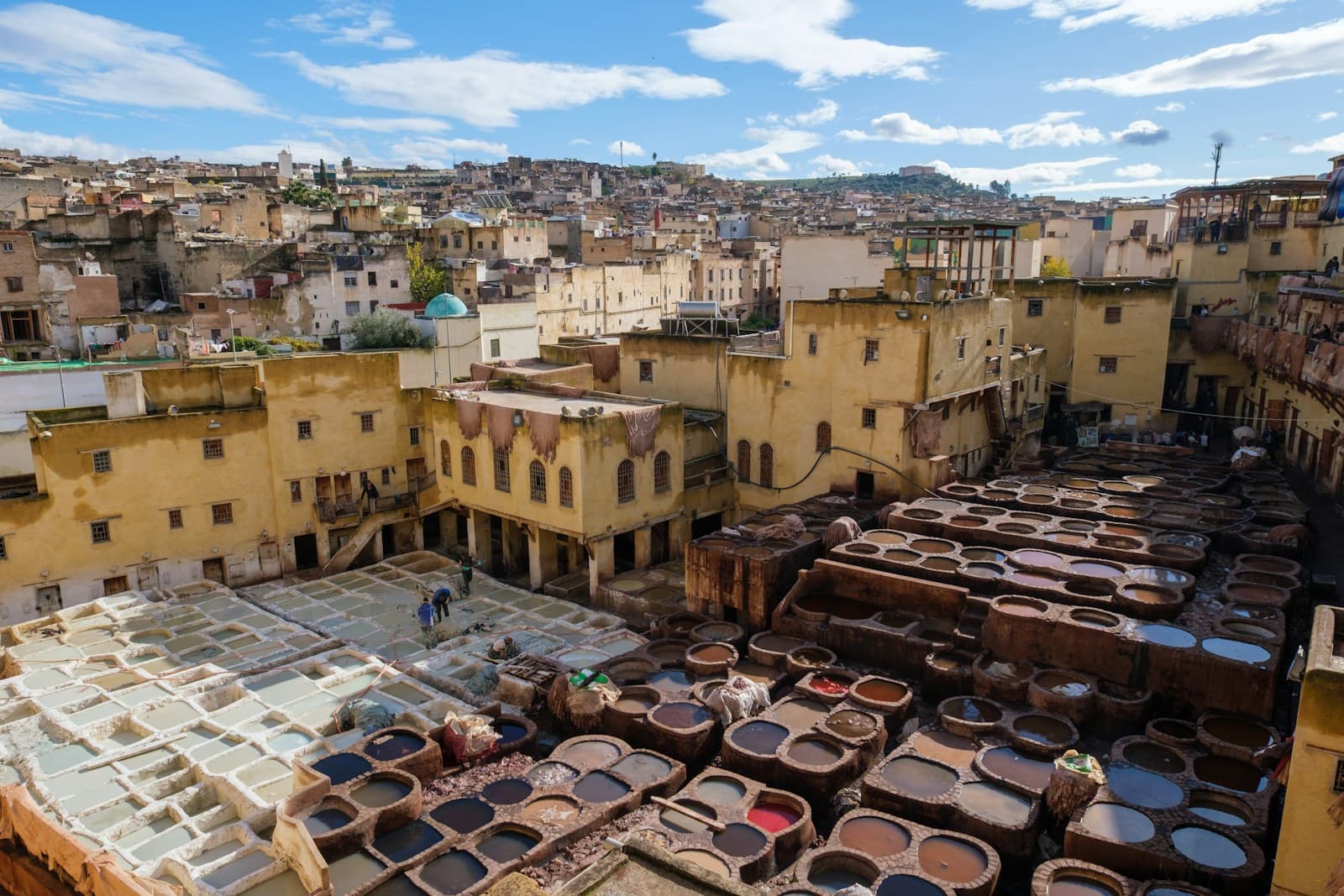
Fes el-Bali medina & Chouara tannery

The largest car-free urban area in the world — 9,000 narrow streets, donkeys still doing the deliveries. Chouara tannery is the 11th-century leather-dyeing operation you smell before you see; balconies above sell you sandals while you watch. Hire a guide for half a day or you will get lost (everyone does).

Blue-painted alley in Chefchaouen Morocco
Tanger-Tétouan-Al Hoceïma

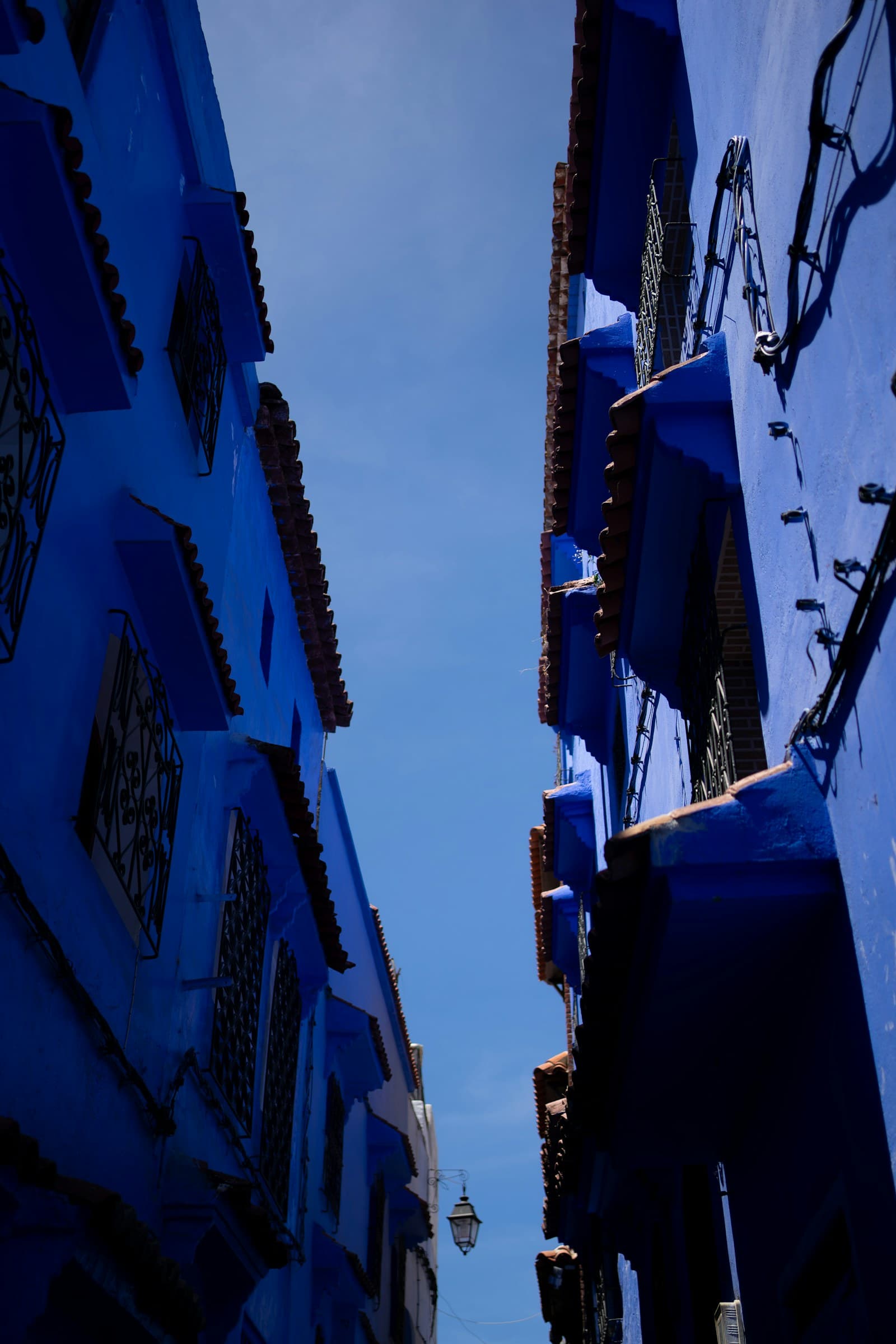
Chefchaouen — the blue city

A mountain town painted entirely in shades of blue. Easy 2-day stop from Fes (4hr by bus or grand taxi) or Tangier (2hr). Walk at sunrise before the day-trippers arrive — the blue glows. The Spanish Mosque hilltop sunset is the postcard.

Camel caravan crossing the dunes of Erg Chebbi at sunset
Drâa-Tafilalet

Sahara — Erg Chebbi & Merzouga

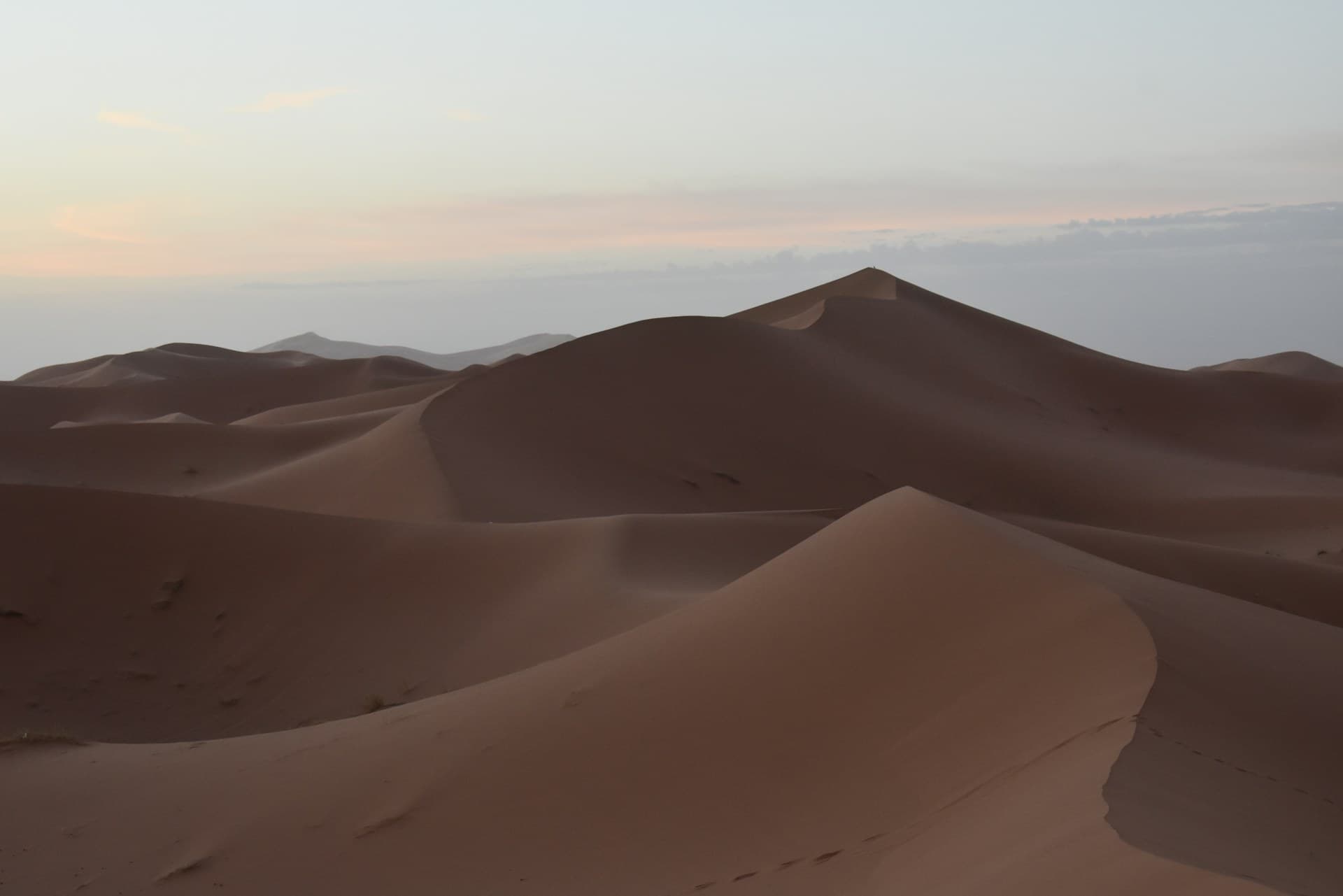
The dunes of postcards — 150m high, golden-orange at sunrise. 8-hour drive from Marrakech via Aït Benhaddou and the Dadès Gorges. Sleep in a desert camp (camel ride out at sunset, Berber dinner, stars), drive or 4x4 back. Two days minimum; three is right.

Snow-capped Atlas mountains above a Berber village
Marrakech-Safi

High Atlas — Imlil & Toubkal

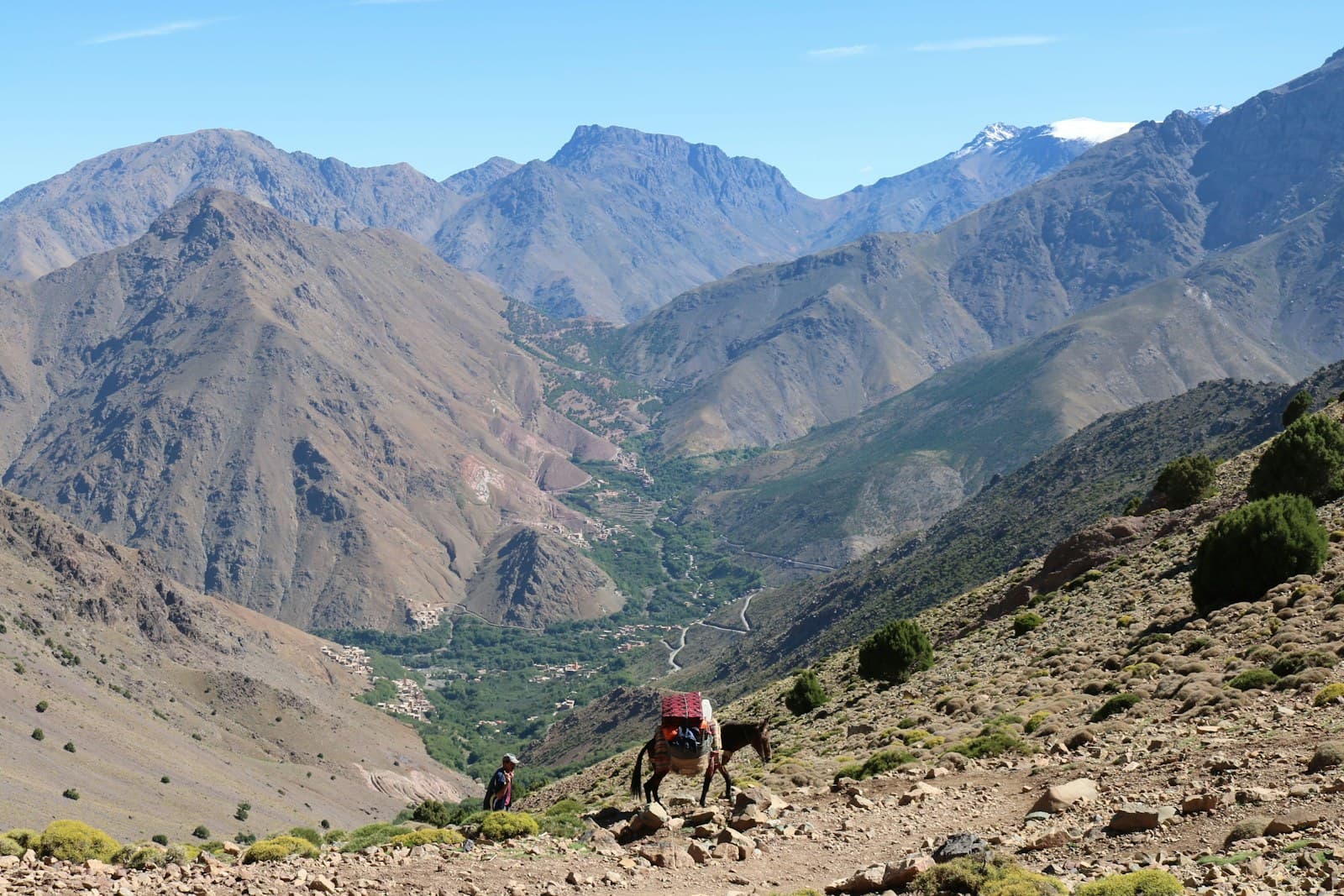
90 minutes from Marrakech to Imlil — the trailhead village for Mt Toubkal (4,167m, North Africa's highest). Day hikes to Berber villages, the Three Valleys, waterfalls. Toubkal summit is a 2-day guided climb; the views from the refuge alone justify the trip.

Blue fishing boats in the Essaouira harbor
Marrakech-Safi

Essaouira

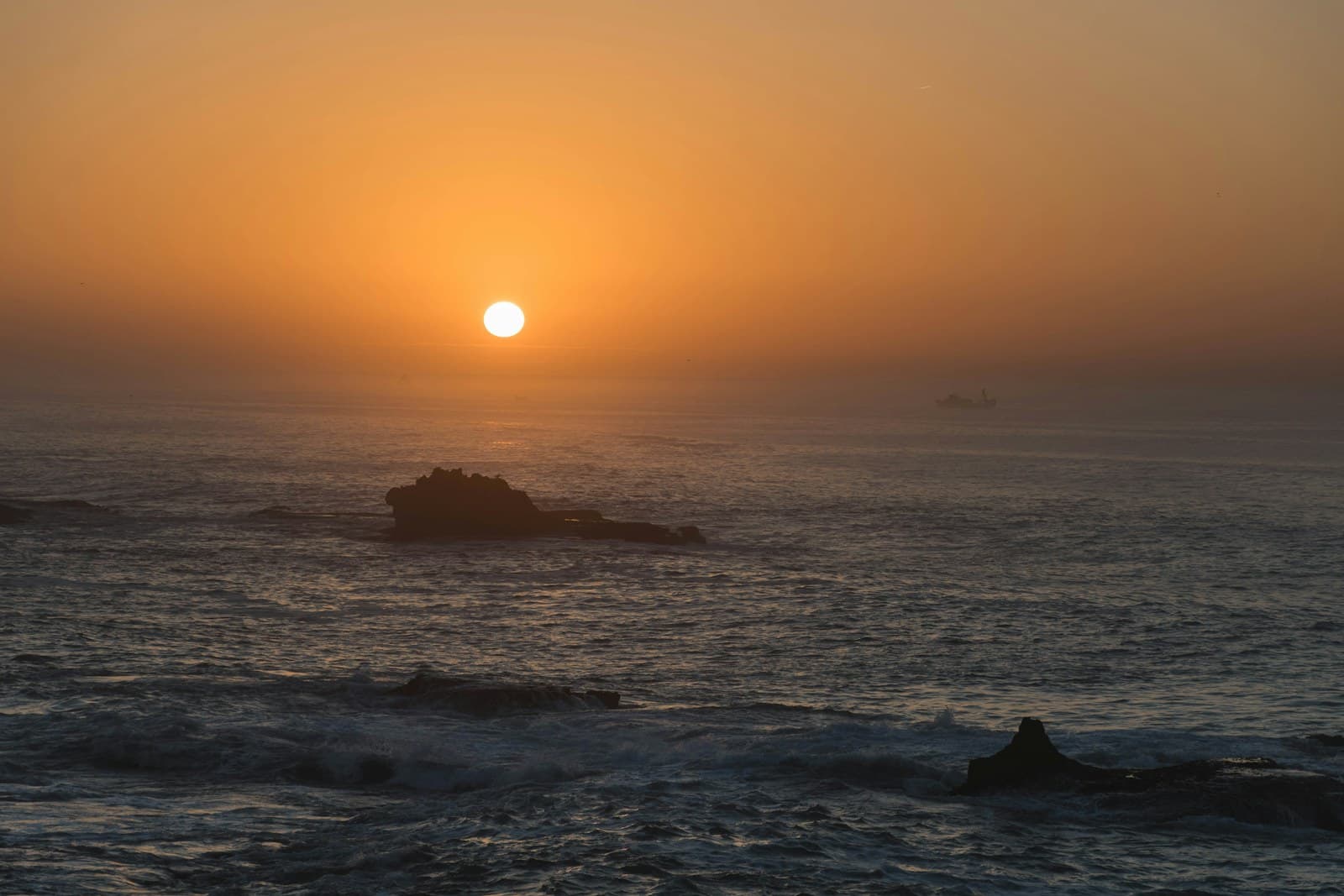
Coastal Morocco's calmest spot — Portuguese ramparts, blue fishing boats, trade-winds keep it 22°C while Marrakech bakes at 40°C. Walk the medina (UNESCO), eat grilled sardines at the port, kitesurf or windsurf the bay. 3 hours from Marrakech by bus.

Hassan II Mosque minaret on the Atlantic coast in Casablanca
Casablanca-Settat

Casablanca — Hassan II Mosque

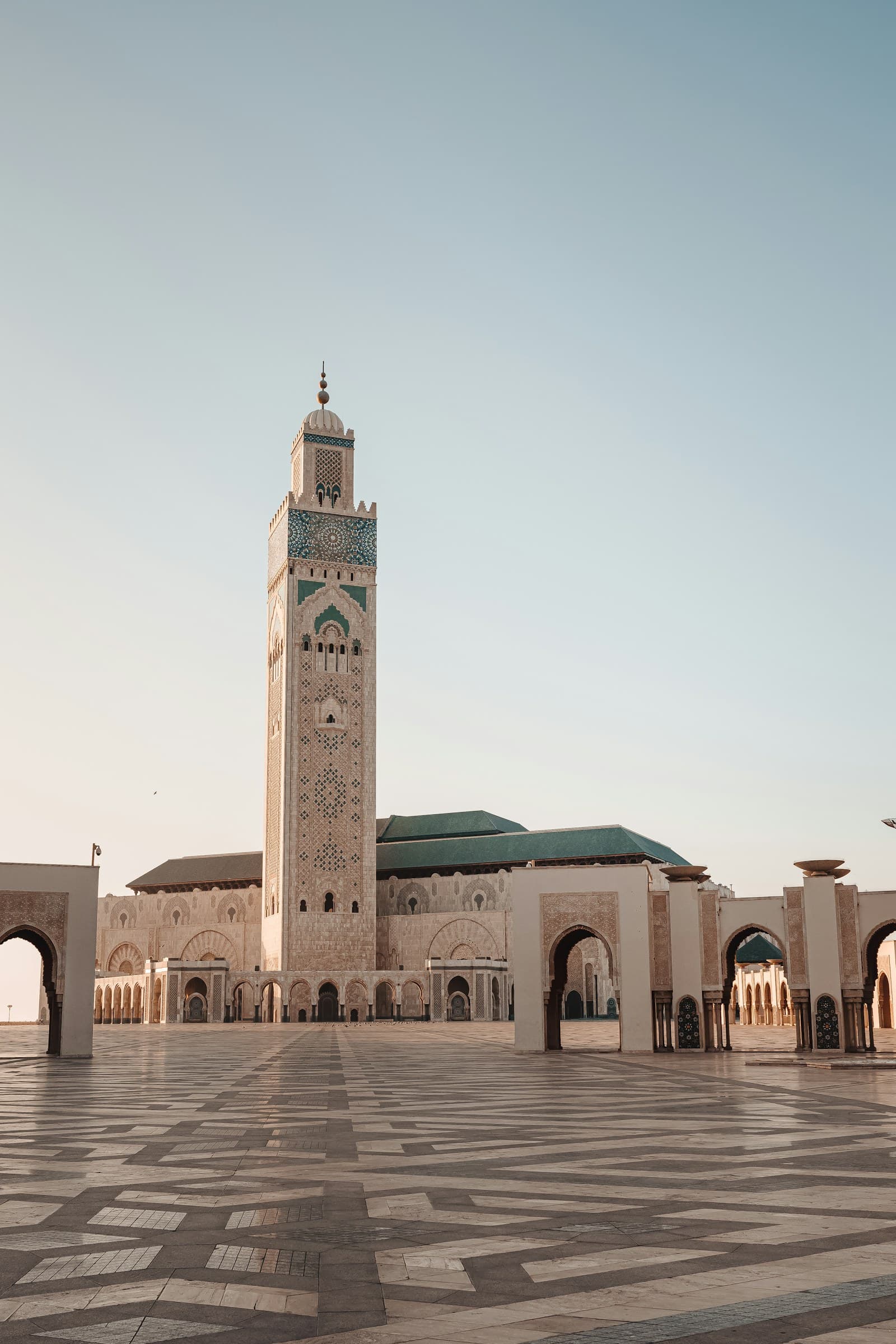
The second-largest mosque in the world after Mecca, half its 210m minaret sitting on a rocky outcrop in the Atlantic. One of the few mosques in Morocco non-Muslims can enter (guided tours: 9am, 10am, 11am, 2pm). Otherwise, Casablanca is a layover, not a stay.

Clay kasbah of Aït Benhaddou with palm trees
Drâa-Tafilalet

Aït Benhaddou & the kasbahs

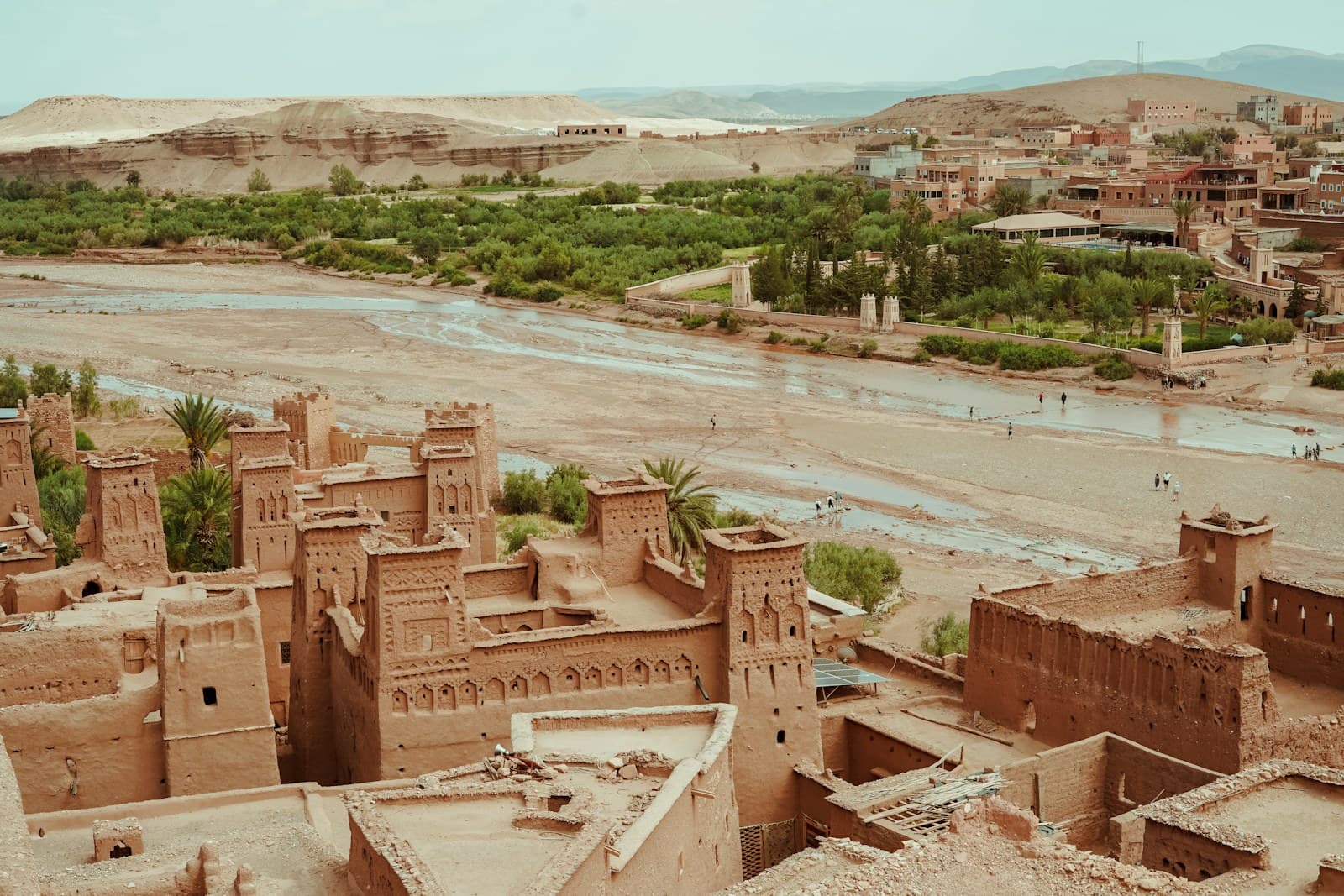
A fortified clay city on the old caravan road, UNESCO-listed, used as a film set for Gladiator and Game of Thrones. Stop here on the Marrakech-to-Sahara drive. Stay one night to see it at sunset and sunrise without other tourists.

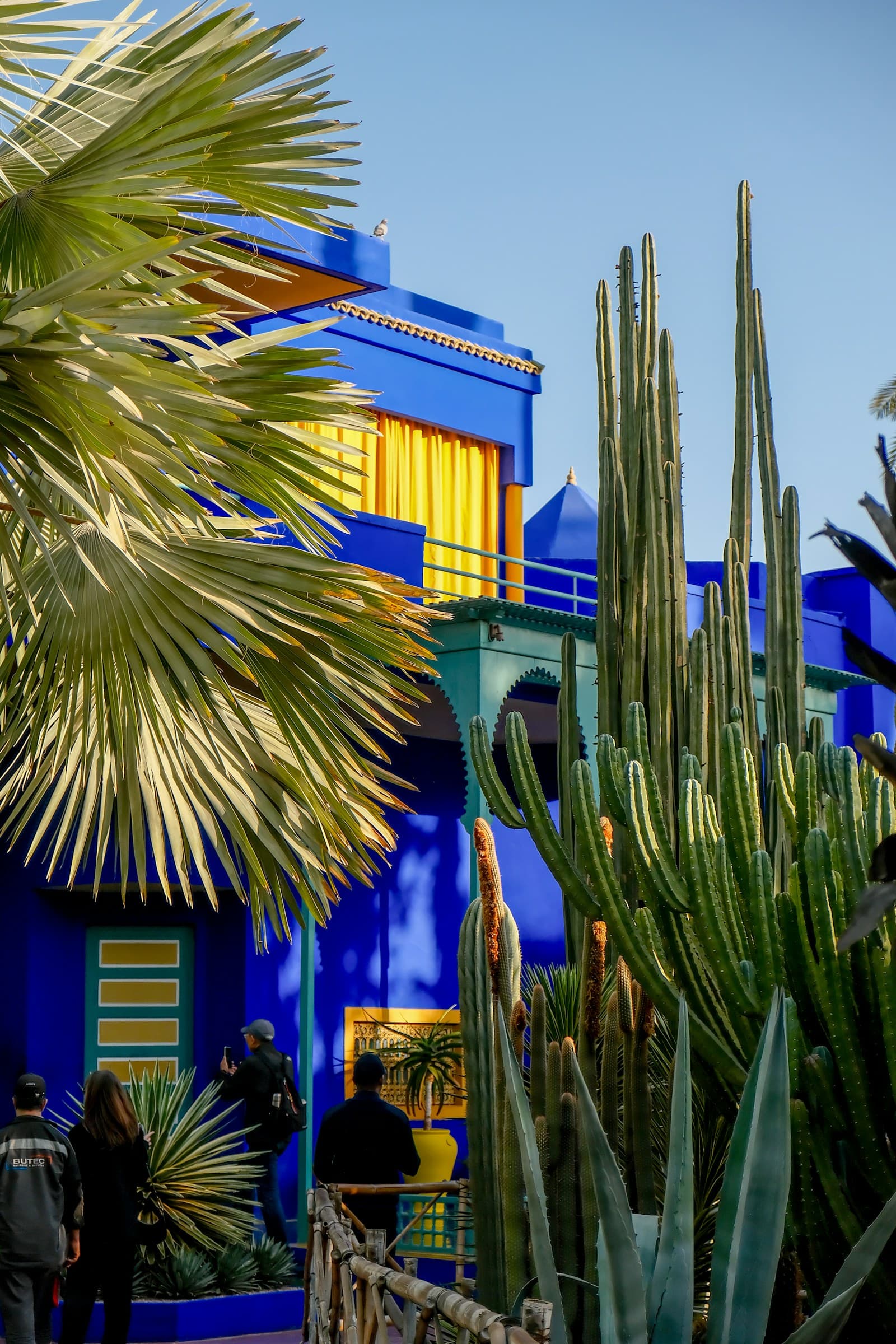
Cobalt blue walls and cacti at Jardin Majorelle, Marrakech
Marrakech

Jardin Majorelle & YSL Museum

The cobalt-blue villa and exotic garden Yves Saint Laurent bought and saved from demolition in the 1980s. Next door, the YSL Museum tells the story of his Morocco love affair. Book Majorelle online — the queue without ticket is 90 minutes.

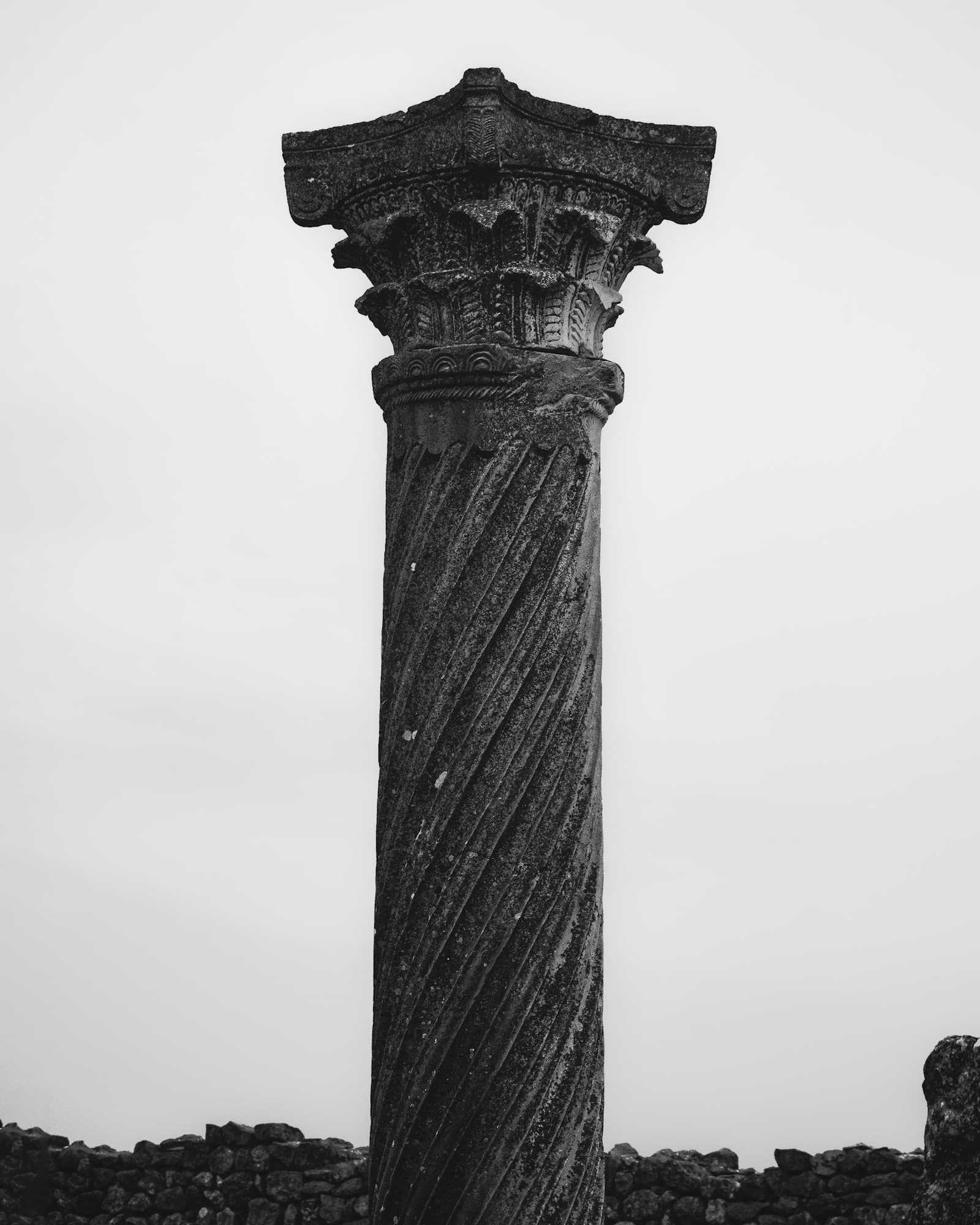
Roman ruins of Volubilis in Morocco
Fes-Meknes

Volubilis & Meknes

Roman ruins from the 1st century BCE — mosaics still in place, columns standing, capital of the Roman province of Mauretania. 1 hour from Fes; pair with imperial Meknes (Bab Mansour gate, Moulay Ismail mausoleum). The Roman side of Morocco no one expects.

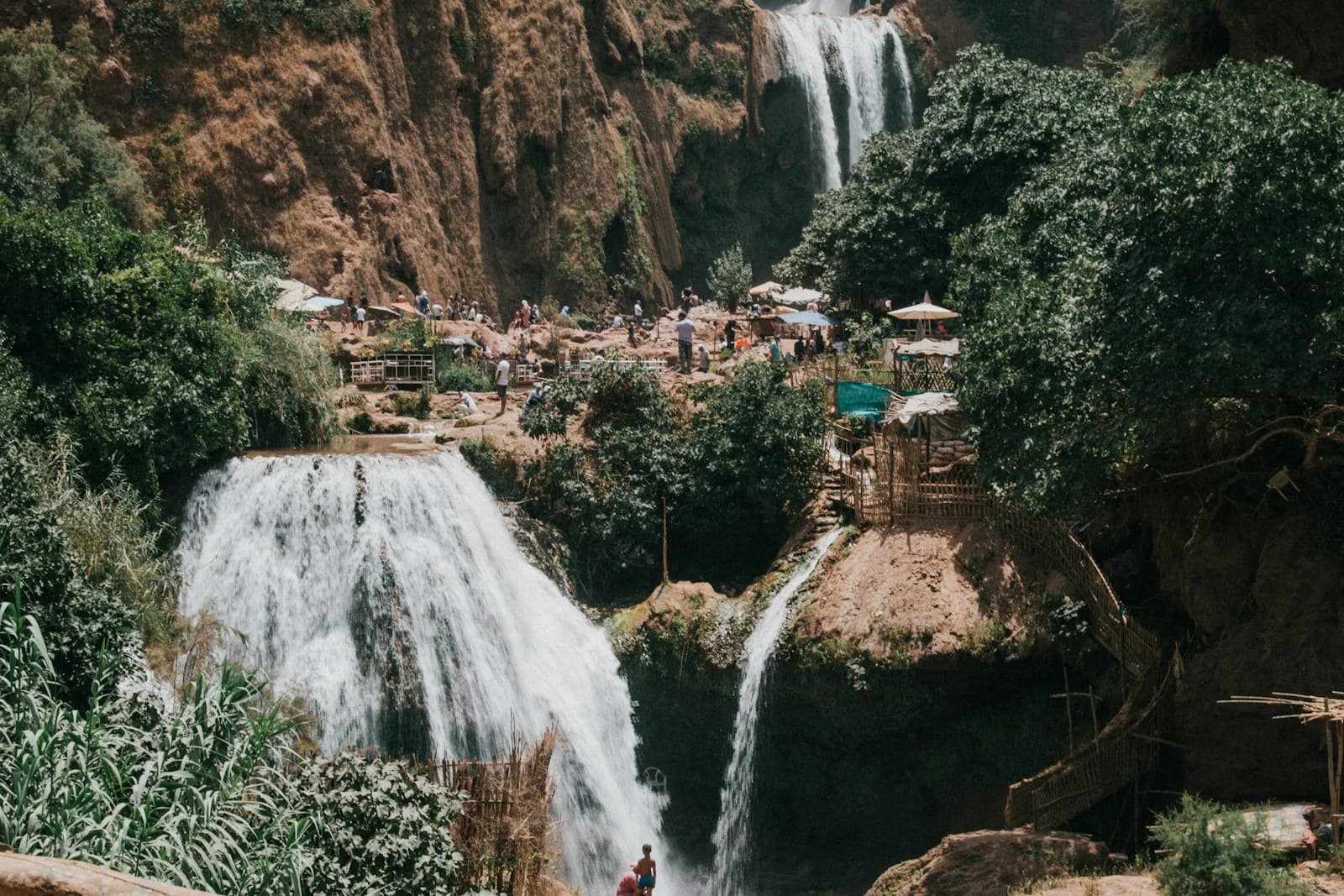
Triple-tier waterfalls of Ouzoud in the Middle Atlas
Béni Mellal-Khénifra

Ouzoud Falls

110-metre triple-tier waterfalls in the Middle Atlas, often with rainbows in the spray. Wild Barbary macaques in the surrounding forest. Day trip from Marrakech (3 hours each way) or stay overnight in a family-run guesthouse for the dawn view.

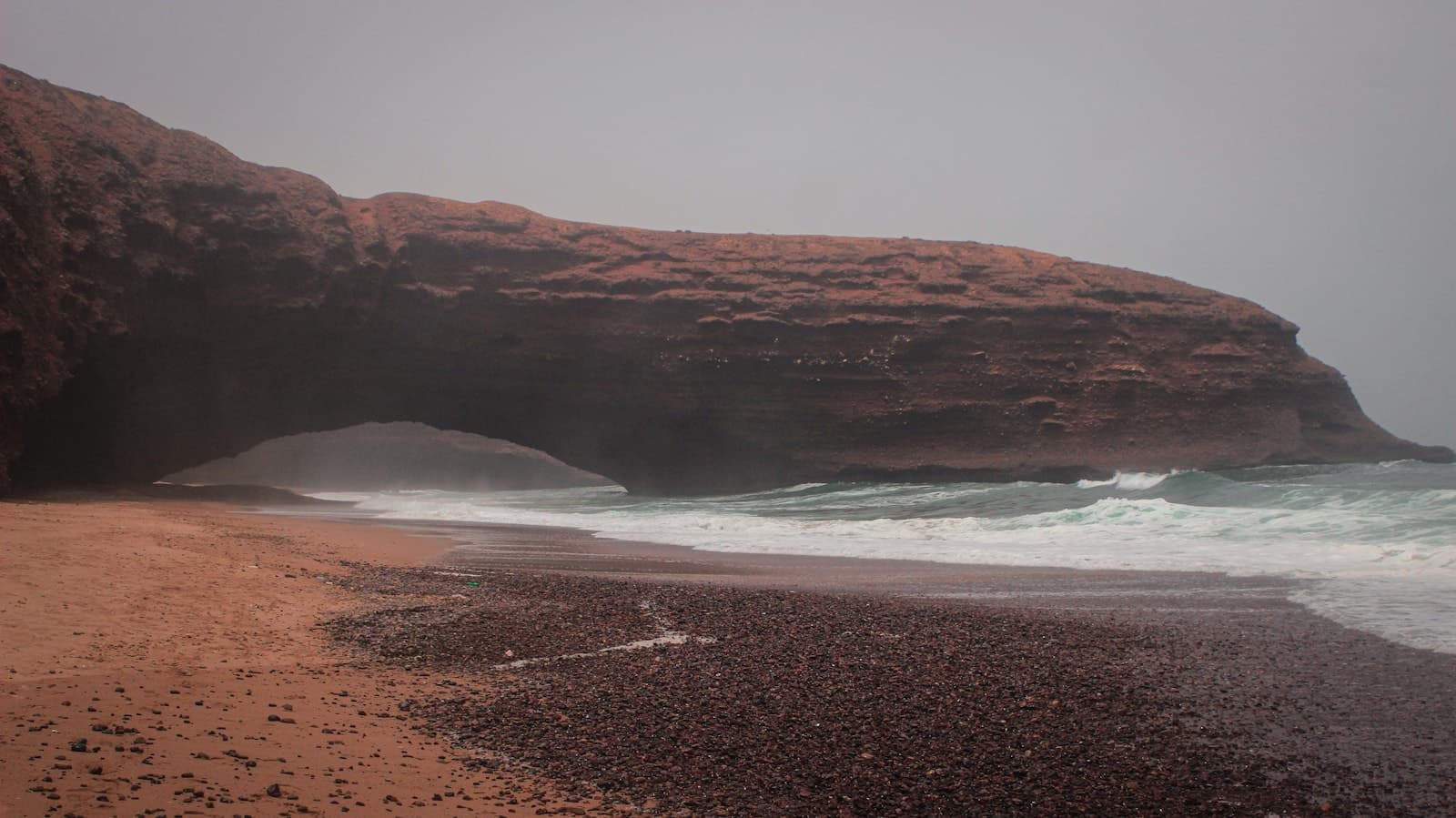
Red sandstone arch over Legzira beach on the Atlantic coast
Souss-Massa

Legzira & the Atlantic south

Red sandstone arches over an empty Atlantic beach, 2 hours south of Agadir. One arch collapsed in 2016; another still stands. Combine with Taghazout (surf town) or Tafraoute (Anti-Atlas red rocks). The Morocco no tour bus shows you.

Specialties worth trying

Food, drinks, and experiences this country does better than anywhere else.

Moroccan tagine clay pot with cooked stewFood

Tagine

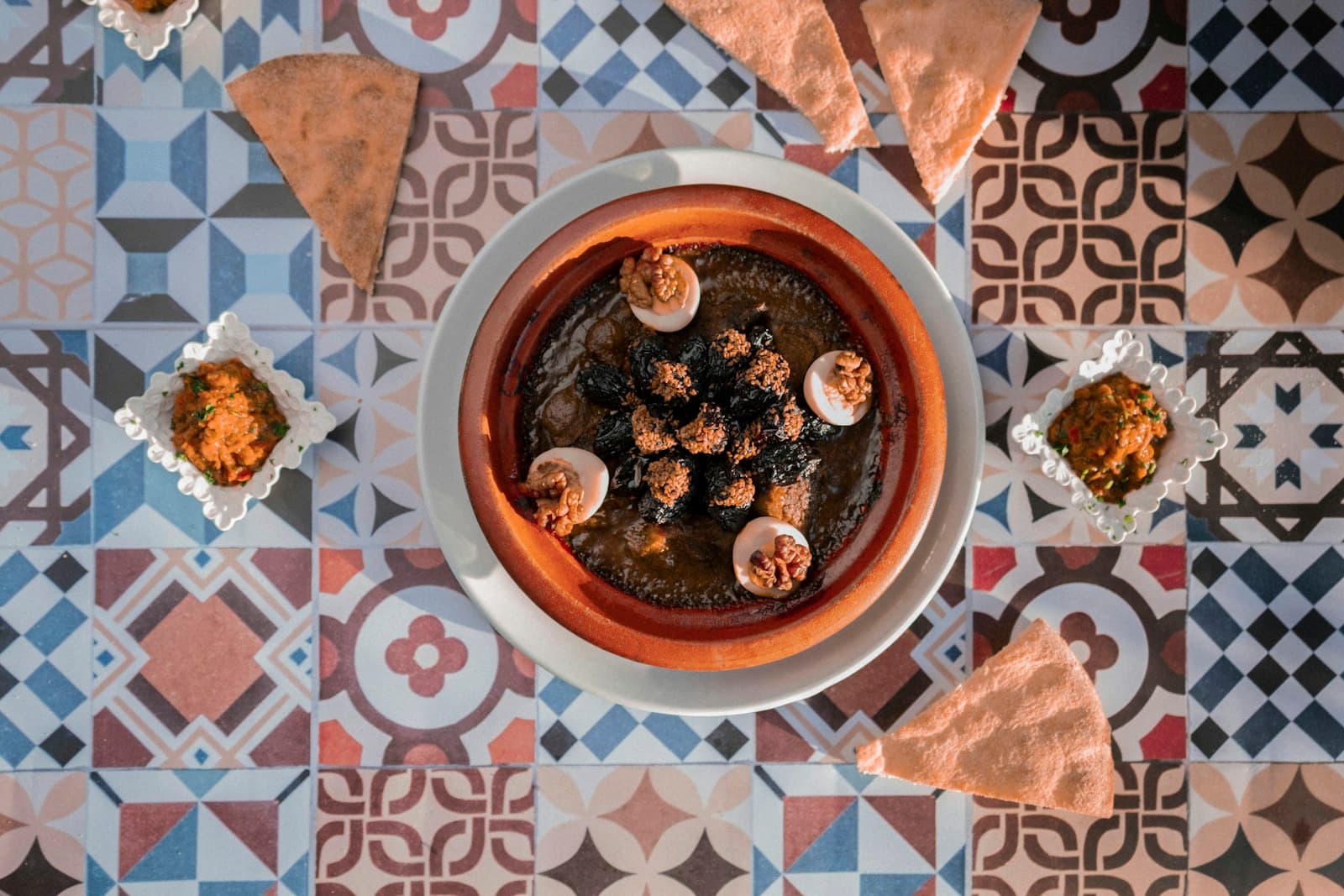
Slow-cooked stew in a conical clay pot. Chicken with preserved lemon and olives, lamb with prunes and almonds, kefta (meatballs) with egg, vegetable tagine. Eaten with bread (no cutlery, traditional). The pot itself does the work — every house has at least three.

Moroccan couscous with vegetables and lambFood

Couscous

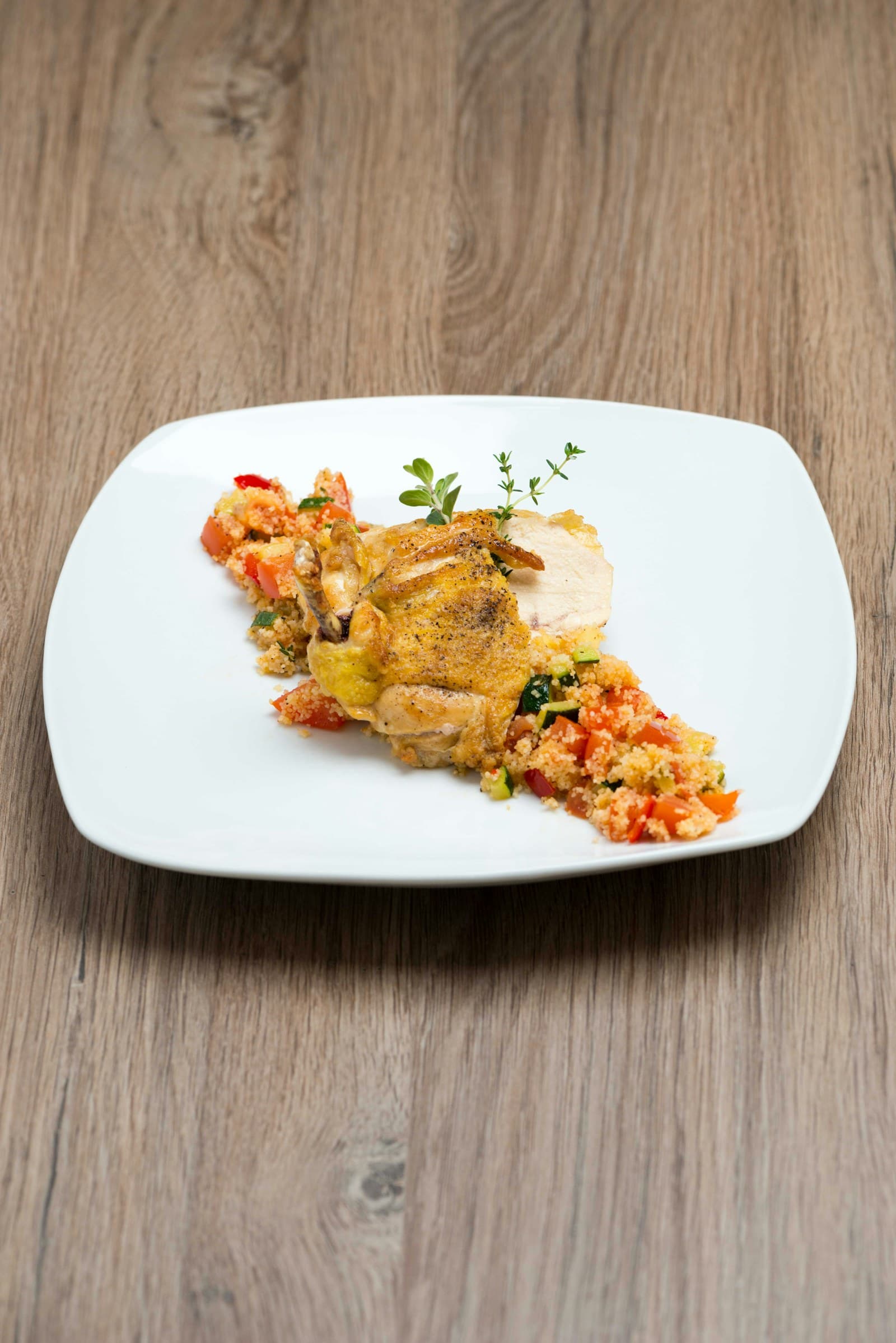
The Friday national dish — steamed three times over a stew of seven vegetables and lamb or chicken. The hand-rolled real version takes 4 hours to make and is unrecognizable from the boxed European version. Eat it Friday lunch at a Moroccan family riad if at all possible.

Moroccan mint tea poured from height into glassesDrink

Mint tea

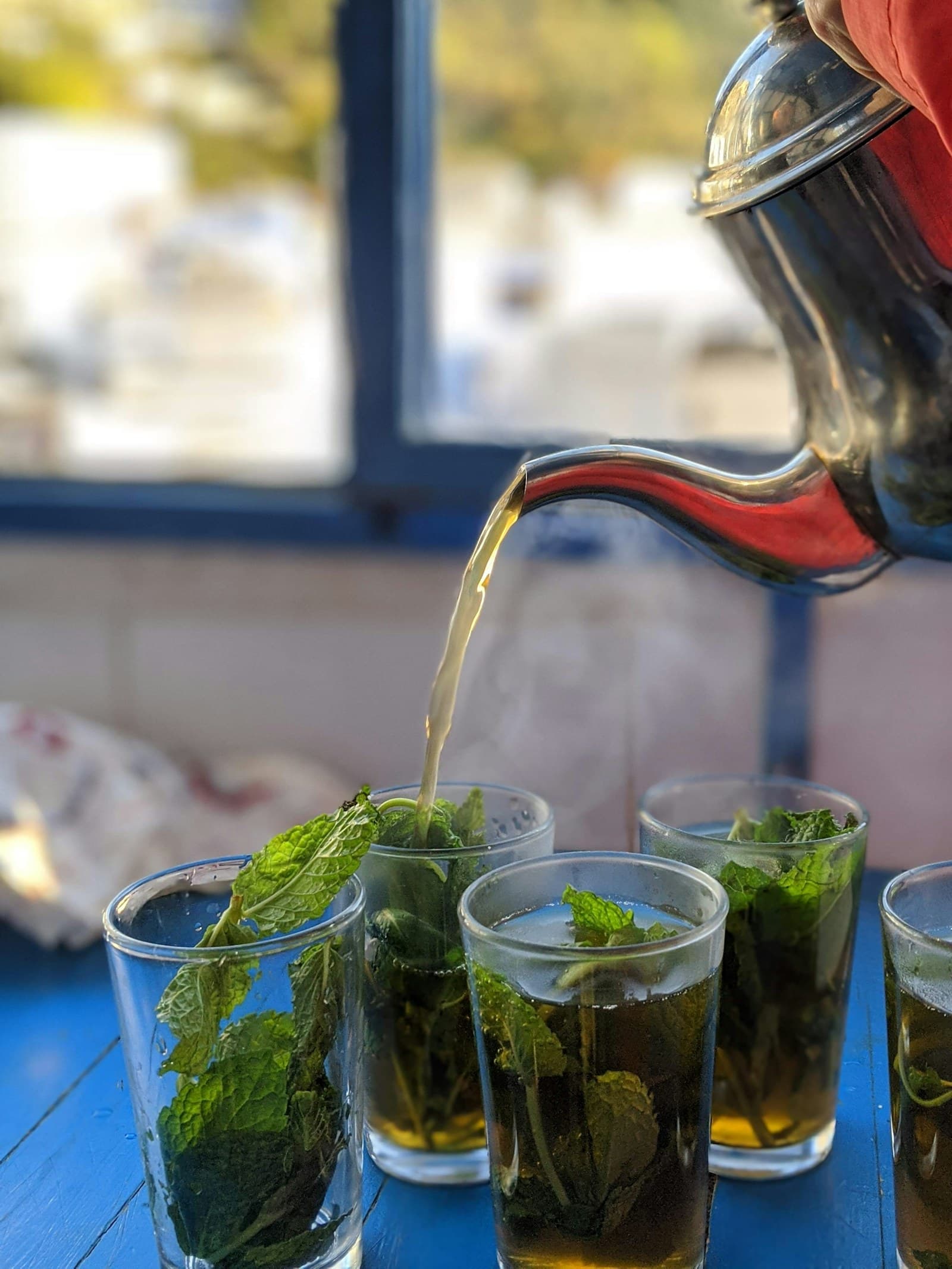
The 'Berber whisky' — green tea, fresh mint, a lot of sugar, poured from waist height to create the foam (and aerate it). Offered everywhere, at every transaction, three glasses each: the first bitter as life, the second sweet as love, the third gentle as death. Refusing is rude.

Colorful piles of spices in a Moroccan soukFood

Spice markets

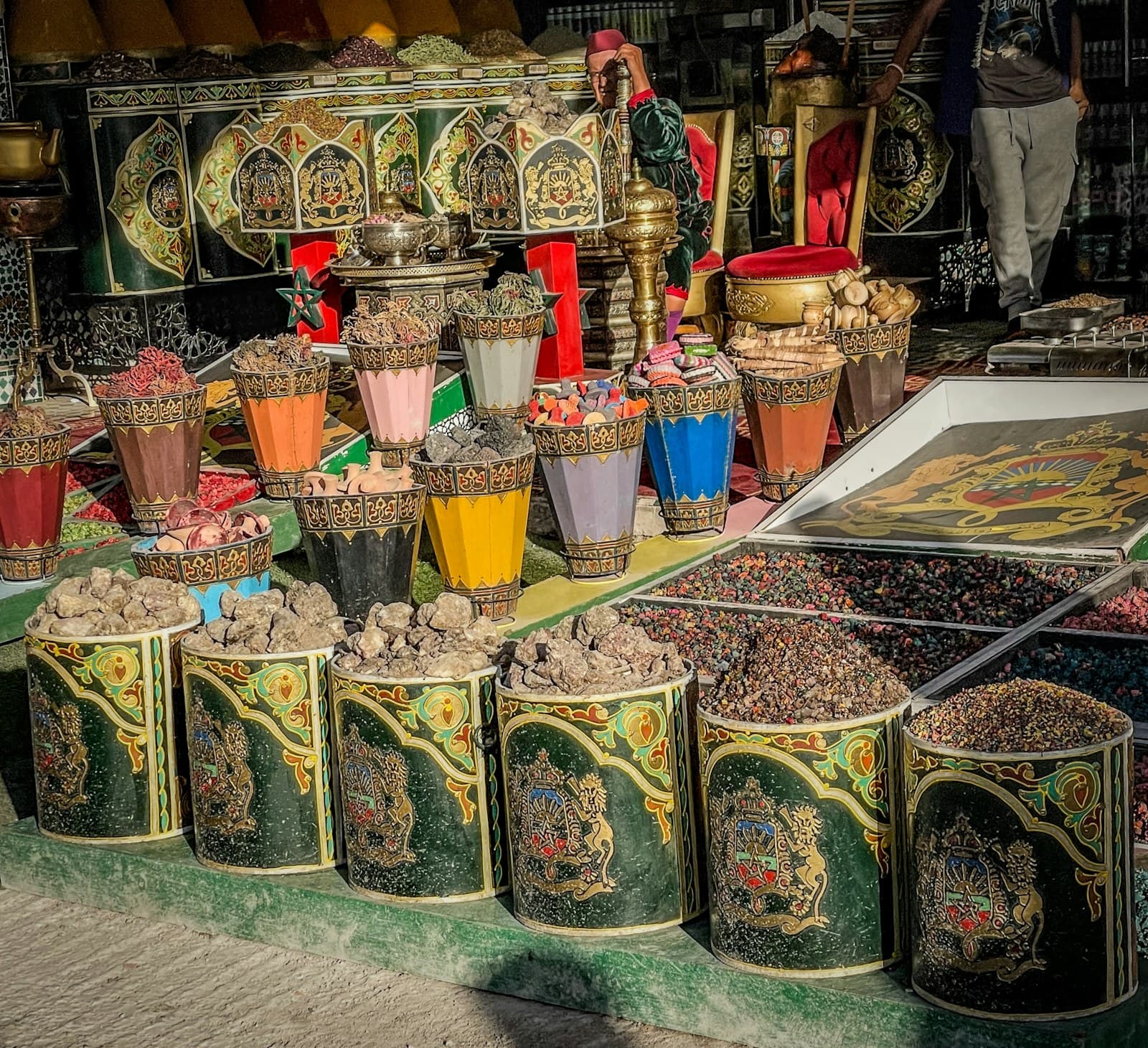
Mounds of saffron, cumin, ras el hanout (the 'top of the shop' 30-ingredient blend), preserved lemons, dried roses, argan oil. Marrakech's Rahba Kedima square and the spice corner of Fes el-Attarine are the canonical ones. Buy whole spices not ground — they last and they're real.

Zellige-tiled courtyard of a Moroccan riadCraft

Riad & zellige craft

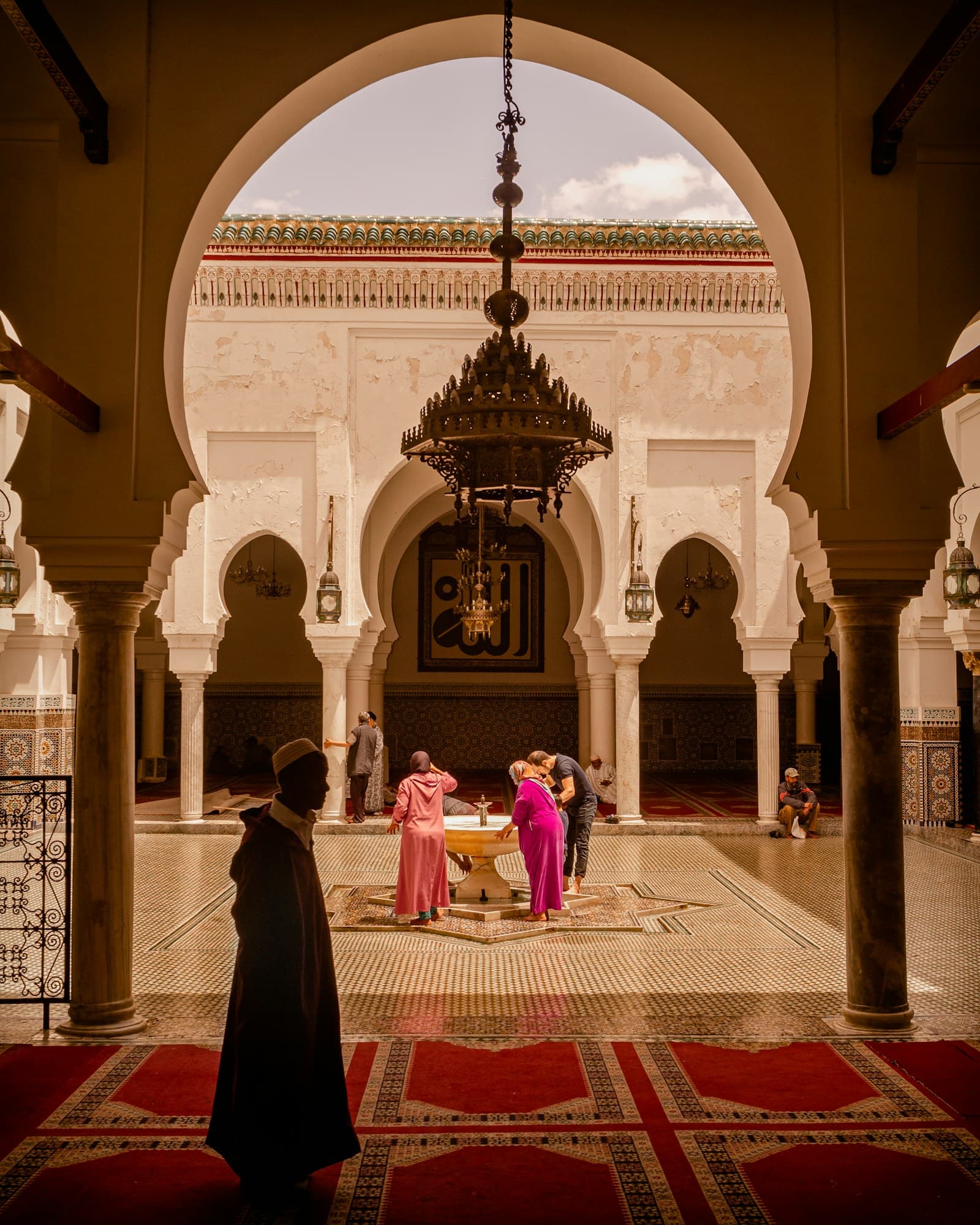
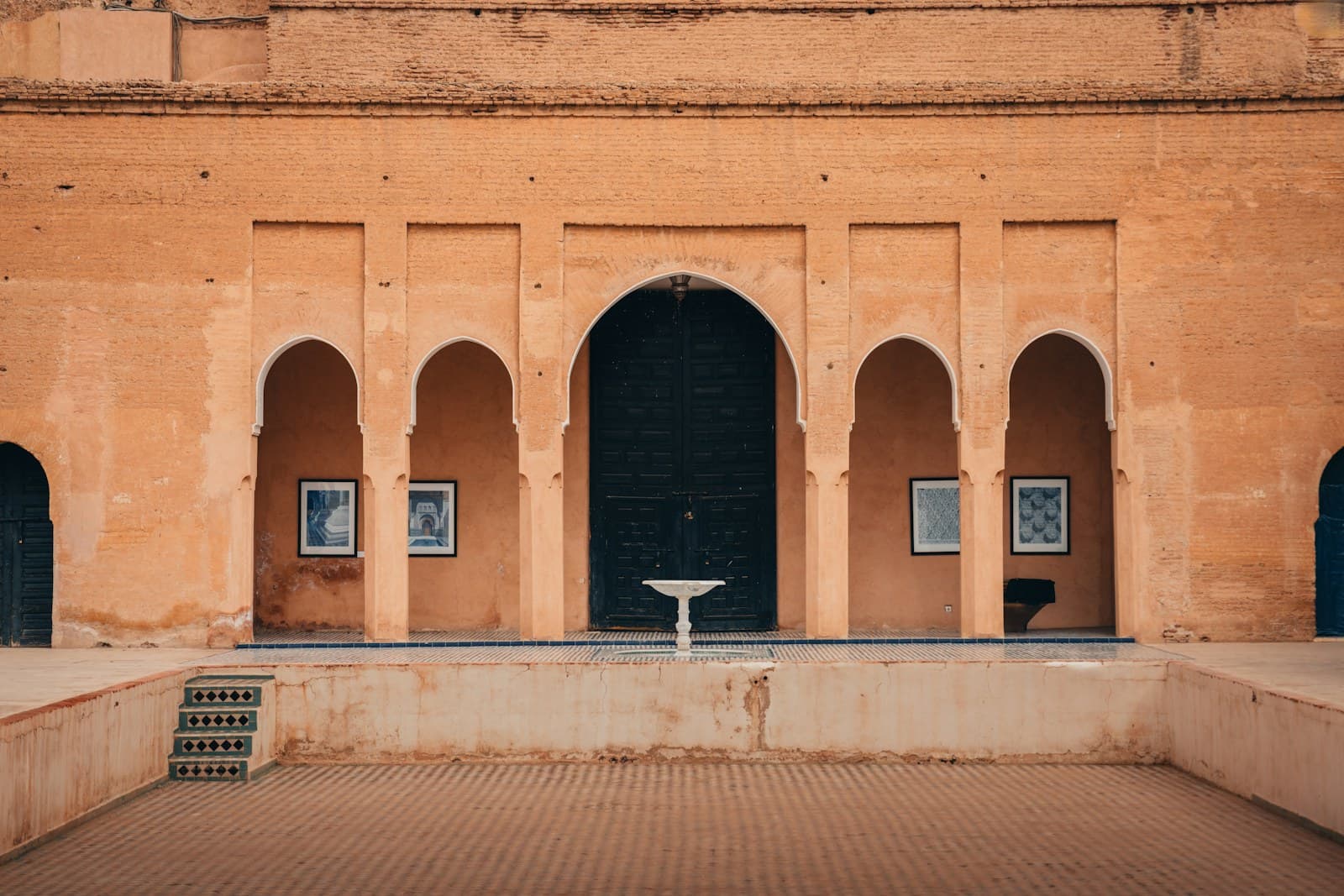
Sleeping in a riad is half the trip. Traditional houses built around a central courtyard with fountain and orange trees, walls covered in zellige (hand-cut geometric ceramic tiles), carved cedar, painted plaster. From €40 to €400 a night depending on the level.

Berber rugs and Moroccan textiles in a workshopCraft

Berber rugs & crafts

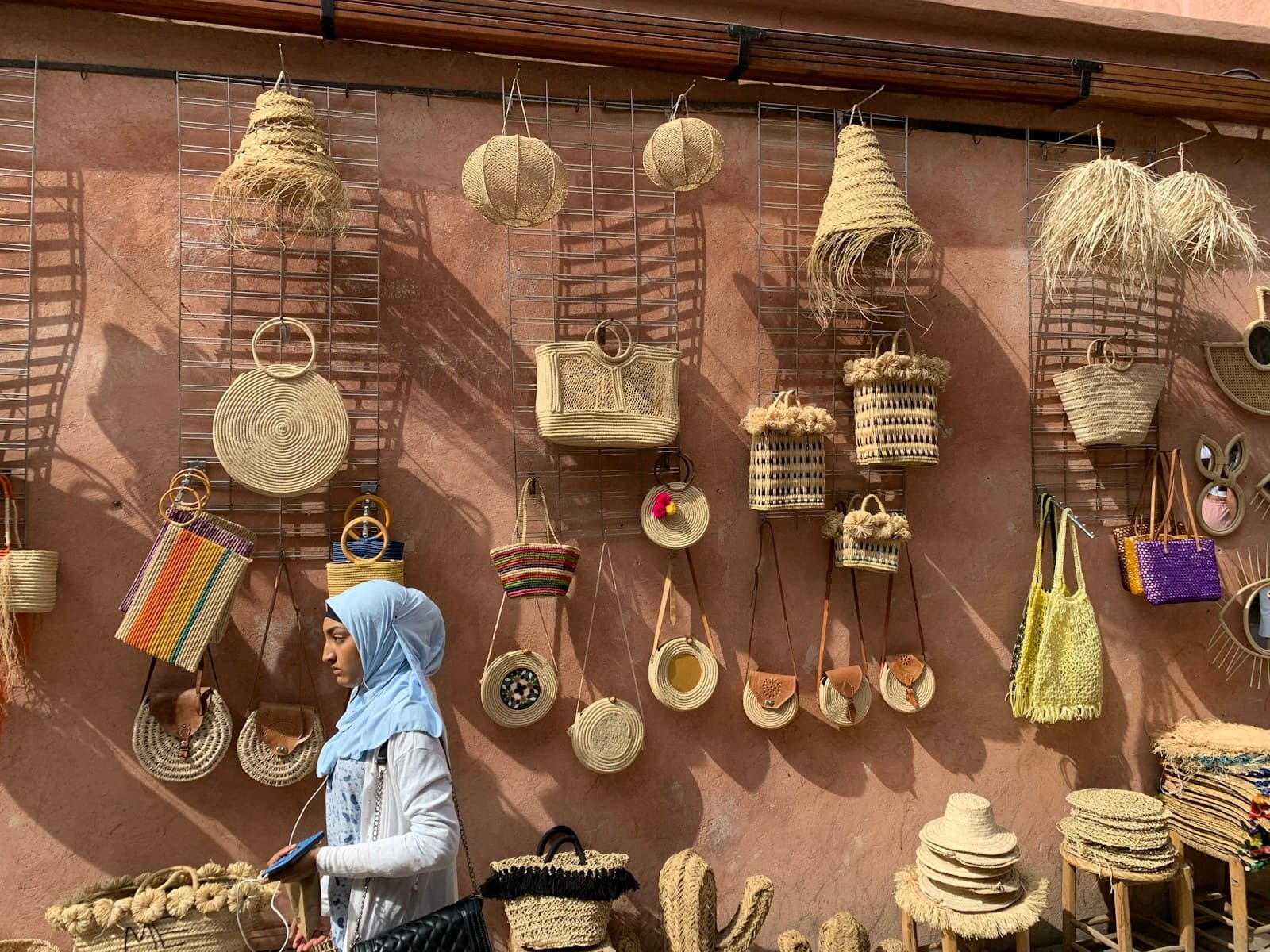
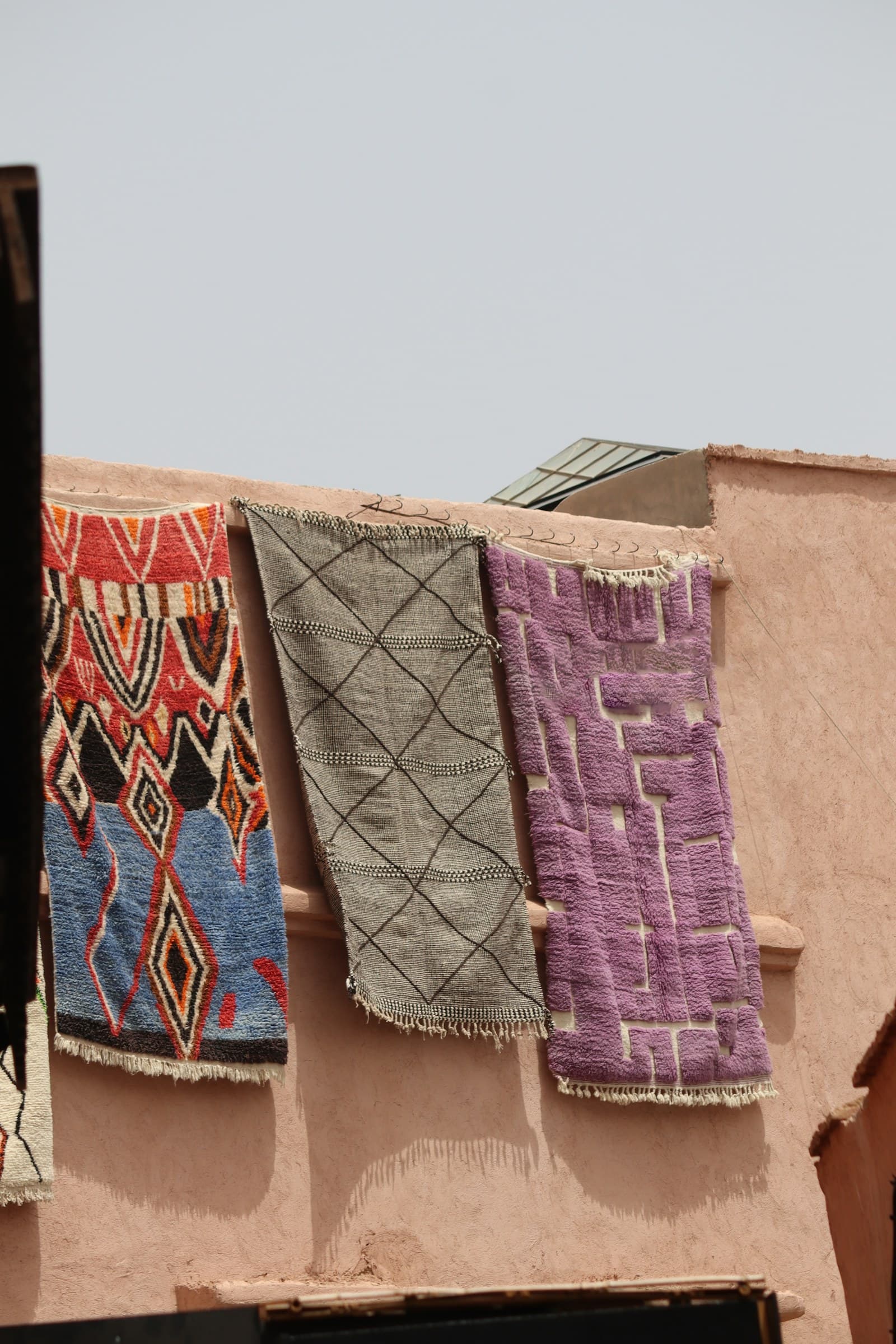
Beni Ourain rugs (cream wool, black diamonds), kilims, leather pouf chairs, brass lanterns, blue Fes pottery. The Marrakech and Fes souks have it all; the Atlas village cooperatives (around Ouirgane, Asni) have it cheaper and more authentic. Always bargain to 50–60% of the asking price.

Colored dye pits of the Chouara tannery in FesCraft

Leather & tanneries

Fes's Chouara tannery (11th century, still operating) and Marrakech's smaller tanneries make the leather babouches, bags, and poufs you see everywhere. The hides are dyed in pigeon-droppings-and-quicklime pits; the smell is real but the leather is good. Buy from cooperative shops, not pushy guides.

Regions to know

To frame your trip by what you have time for and what you're after.

Marrakech & Central

Marrakech, Ouzoud, High Atlas, Aït Benhaddou

Most international flights land at Marrakech-Menara (RAK). Use Marrakech as the base for everything south and west: day trips to the High Atlas, Ouzoud Falls, Essaouira; longer trips to Aït Benhaddou and the Sahara.

Fes & Meknes (Imperial cities)

Fes, Meknes, Volubilis, Middle Atlas, Ifrane

The historical heart. Fes for the most authentic medina, Meknes for the imperial gates and walls, Volubilis for the Roman ruins. Day trips to the cedar forests of Ifrane (the 'Switzerland of Morocco') and the Middle Atlas Berber villages.

Sahara & the south

Merzouga, Erg Chebbi, Zagora, Dadès & Todra gorges

The desert south. Erg Chebbi (Merzouga) is the big-dune Sahara; Erg Chigaga (Zagora) is more remote and quieter. The drive from Marrakech via Aït Benhaddou + the Dadès gorges + the Todra gorge is one of the world's great road trips. 4–5 days minimum.

Atlantic coast

Essaouira, Casablanca, Rabat, Taghazout, Agadir, Legzira

Cooler, breezier, fish-heavy. Essaouira for the medina + wind, Taghazout for the surf, Legzira and the south for the empty wild beaches. Casablanca is the airline hub but not a destination; Rabat the political capital, walkable and quiet.

Rif & north (Chefchaouen)

Chefchaouen, Tangier, Tétouan, Cap Spartel

Mountainous, cooler, Spanish-influenced (Tétouan was the Spanish protectorate capital). Chefchaouen as base; Tangier as the ferry-to-Spain point. The least Arabic-feeling part of Morocco — Berber and Spanish dominate.

Anti-Atlas & deep south

Tafraoute, Anti-Atlas, Western Sahara, Dakhla

The Morocco for second and third trips. Tafraoute for red-rock landscapes and almond groves. Dakhla in the Western Sahara for kitesurfing on a 40km lagoon. Empty, quiet, technically Morocco but a planet apart.

Suggested itineraries

Three lengths, depending on time. Fork any of them into WePlanify.

7d

Marrakech + Sahara — 7 days

The classic first trip — souks of Marrakech, drive south to the desert, sleep one night in a camp.

  • Day 1–3: Marrakech (medina, Jemaa el-Fna, Jardin Majorelle, hammam)
  • Day 4: Drive Marrakech → Aït Benhaddou → Dadès gorges (sleep en route)
  • Day 5: Dadès → Todra gorges → Merzouga / Sahara camp
  • Day 6: Sahara sunrise → drive back to Marrakech (long day)
  • Day 7: Marrakech buffer + fly home from RAK
10d

Marrakech + Sahara + Fes — 10 days

Add the imperial north. Internal flight Marrakech-Fes or a long drive via Meknes.

  • Day 1–3: Marrakech
  • Day 4–5: Drive south, Aït Benhaddou + Sahara camp
  • Day 6: Drive back to Marrakech, fly to Fes
  • Day 7–8: Fes medina + Volubilis day trip
  • Day 9: Chefchaouen overnight (bus or grand taxi)
  • Day 10: Fly home from Fes (FEZ) or back to Casablanca (CMN)
14d

Full Morocco — 14 days

Add the coast and the Atlas. Rental car recommended for the south + coast leg.

  • Day 1–3: Marrakech
  • Day 4: Imlil + High Atlas day hike
  • Day 5–7: Sahara loop via Aït Benhaddou + Merzouga
  • Day 8: Drive back via Ouzoud Falls
  • Day 9–10: Essaouira (relax, eat, surf)
  • Day 11: Fly to Fes
  • Day 12–13: Fes medina + Volubilis + Meknes
  • Day 14: Chefchaouen overnight, fly home from Fes

Daily budget

Per person, excluding flights. Three comfort tiers.

Backpacker
35/day

Hostel dorm or basic riad (€15), tagine + street food (€10), grands taxis and walking (€5), one paid attraction (€5). Morocco on the cheap is one of the world's best values — every meal under €5, transportation cheap, accommodation generous.

Mid-range
90/day

Mid-range riad with breakfast (€50), one sit-down dinner + casual lunch (€20), private transfer or rental car (€15 averaged), entries + guide (€5). The right tier — riad living is Morocco's signature experience and worth paying up.

Comfortable
230/day

5-star riad or design hotel (€150), one fine-dining or Atlas resort dinner (€55), private driver (€20), guided desert experience (€5). Honeymoon and royal-style tier — Morocco does luxury very well.

Per person, excluding international flights. The dirham (MAD) is a closed currency — change at the airport or banks, never on the street. Cash is dominant; ATMs are everywhere in cities. Bargaining is expected at souks (start at 30%, settle at 50–60% of the asking price).

Cultural do's & don'ts

Small moves that matter — and the ones that make everyone uncomfortable.

  • Dress modestly — covered shoulders and knees in medinas, especially for women. Shorts and tank tops are fine on the coast (Essaouira, Taghazout) but draw constant attention in Marrakech or Fes. A scarf is a useful all-purpose layer.

  • Bargain at souks, but stay friendly. Start at 30% of the asking price; settle at 50–60%. If you can't agree, walk away calmly — half the time you're called back. Don't bargain over fruit or food: those prices are fixed.

  • Don't follow random 'helpful' people offering to guide you in the medina. Most are touts paid by carpet shops or tanneries to bring you in. If you need a guide, hire an official one through your riad — they wear a badge and cost €20–30 a half-day.

  • Carry small notes (10–50 MAD). Taxis, tea sellers, and small souk vendors rarely have change for 200 MAD notes. Tip 5–10 MAD for help with bags, taxi drivers who don't try to rip you off, and the hammam attendant.

  • Don't photograph people without asking. It's polite, often returned with a smile and yes — and refusing a child's request for money after taking their photo is awkward. In tannery viewing balconies, the shop owners expect you to buy if you photograph.

  • Use Inwi or Maroc Telecom prepaid SIM (50–100 MAD for 10GB, sold at the airport). Google Maps offline + WhatsApp covers 95% of navigation and communication needs. Wi-Fi is everywhere but spotty.

  • Don't drink tap water. Bottled water is 5–10 MAD a bottle everywhere. Ice in upscale restaurants is fine; avoid in roadside stalls. Cooked food and freshly boiled mint tea are always safe.

  • Plan around Ramadan if possible. In 2026 it falls February 17 – March 18; in 2027 February 6 – March 7. Restaurants in tourist zones stay open in daytime, but most local places close. Evenings (post-iftar) are alive and beautiful; daytime is quiet and respectful.

Plan your Morocco trip with your crew

Bring this guide into WePlanify, invite the group, and build the trip together. Shared map, polls, shared budget — all free.